Transcript
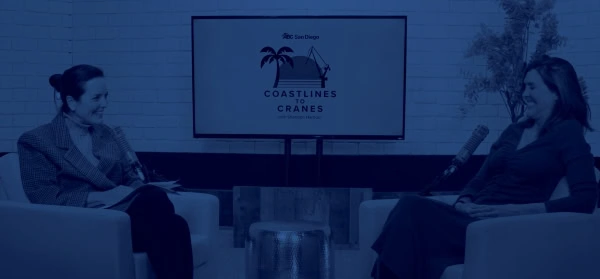
Good morning, San Diego. Welcome back to this episode of Coastlines to Cranes. This is the original San Diego podcast where we take you through the culture of construction from the coast to the job site and everything in between. Today, as our guest, we are very lucky to have the wonderful Inez Robinson-Odom. She is the co-author of The Silent Rebellion, and we are delighted that she has joined our ABC team to take us to the next level. I was once told that the winning team in construction is the one that understands and gets workforce development and that the training program that excels will be the team that wins.
And so, we are wonderfully delighted to welcome Inez to the ABC team. She has a wonderful background that she's going to tell us about, and she's also going to talk to us about the groundbreaking things that we're doing at ABC to take our program to the next level. Welcome, Inez! Shandon, thank you so much for having me. I'm delighted to be here. And indeed, I'm thrilled to have the opportunity to spend time with the ABC San Diego team in particular through the Leadership in Residence model. Yes, tell us more about the Leadership in Residence. I know that that's your signature model, and we are engaging with you right now on that model and really excited to work with you on that.
Tell the listeners all about it. Absolutely. So, the premise behind Leadership in Residence is the recognition that, twofold, that when you have a typical consulting model, you have someone come in, they might do some interviews, some observation, they write a report, and they walk away. The idea behind Leadership in Residence is to really be embedded with an organization for three months, four months, however long ends up being determined. But really, the intention is to be able to have those conversations with the team and to talk about the things that need to be addressed, to actually see them implemented.
And then, if there are things that need to be done differently or change a tactic, you're actually still there, your boots on the ground. And the value of that is so often, as we know, some of the best conversations happen in the hallway, not the boardroom, but indeed just passing someone and saying, hey, I understand you're still really working on that. How can I collaborate with you? How can I support you in what you're doing?
Wonderful. And, you know, I met you through Lisa. Yes, Lisa Norquist. Lisa Norquist, yes. And she was working with us on people-centered leadership. Yes. And how we need to change leadership in construction, for the business owners that are listening, from a command and control to people-centered, especially if we're going to retain this generation of workers, because the Gen Z, this generation that's coming in, really is all about people leadership, people-centered leadership. Right. Tell us more about your leadership in residence as well, and the Silent Rebellion, and how you also are working with leaders to change the thought process there.
Exactly. So really, with the Silent Rebellion becoming a modern leader, the spirit of the book is recognizing that the traditional images that some of us have about leadership are really, frankly, obsolete. And what we really need to be thinking about is how do we really cultivate the leader within each person who's part of a team. And there's no question that there's, I think, perhaps a misperception that somehow leadership and personal development is somehow a soft skill, when, in fact, it's almost the complete opposite. It's vital for good leadership to be developed, to be cultivated. It doesn't happen.
It can be really intentionally cultivated. And that's really the spirit of this. In the book, we actually profile 11 different cause leaders with the recognition that our feeling is that they exemplify some of the best qualities of leadership, whether that's listening, whether that's empathy, whether that's having a really good sense of who's in the room with your team, and being able to really learn how to have conversations that may be difficult, but ultimately necessary to yield the results that you want to have. So that's really, it's about a modern leadership approach that, at the end of the day, really keeps people at the center.
That's so fascinating. And it really is timely, especially in this industry of construction, where we're typically very male-dominated. It's command and control. And how we need to shift that thinking. We were talking a little bit before we started the recording about how developing leaders and leadership skills, like you just mentioned, are not a soft skill anymore. It's actually essential. And one of the things that you had mentioned to me was that it's as important as safety. Right, right. And it's quite true. And what's interesting is that, similar to when you think about sort of the command and control structure, ultimately, there are real reasons why at times you want to make sure you are top-down and we've got to do this because we're just trying to make sure everything gets handled in a certain way.
But ultimately, just doing small tweaks in terms of how you're communicating a message or how something is being delivered or also really ensuring understanding. Oftentimes, that's one of the key things that one thinks one is communicating when, in fact, what I'm saying is not what's being heard. So how do we deconstruct that? So that, indeed, we're giving managers, leaders, the tools that they need so that the outcome that is being sought is achieved. I was having a little giggle there when you were talking about the communication and making sure that you're understood. Can't tell you how many times I have thought that I have been very clear and the outcome was nowhere near what I thought it was supposed to be.
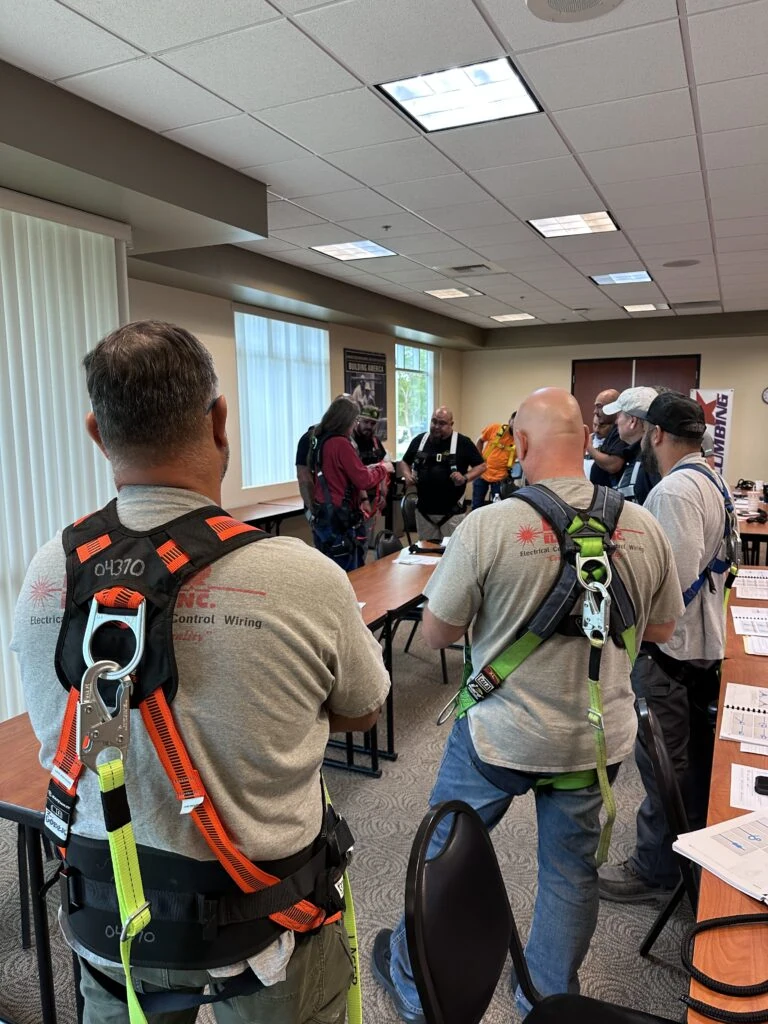
Right, right, right. So it's a constant lesson on refining and, like you said, being very intentional about your leadership skills. Right. And so this is all very timely. I appreciate all of this great insight. Talk to us more about your experience as well in curriculum design and creating curriculums. You're working with us in our apprenticeship program because we have a lot of adult learners. And we have come to the point where we understand that in order to be successful in our vocational and our apprenticeship trades, that our instructors need professional development. Exactly. You and I talked about it and the fact that it's really not been done before.
Right, right. So. Well, and the reality is that it's amazing when folks have domain skills. I know how to, I'm a, you know, managed sheet metal. I know I'm an electrician or a plumber. But they may not have the, as many skills in terms of how you teach adults because that's its own skill. Right. I'm really fortunate in that I worked for years with the California Commission on Peace Officers Standards and Training where I had to construct telecourses to train law enforcement on very complicated issues. So, for instance, I created programming on domestic violence, elder abuse, sexual assault, threat assessment, very, a show on the topic of, that was really designed to help crime victims.
And so, again, and then went on to do work at the federal level, doing with the Office, the Department of Justice Office for Victims of Crime, similarly creating training to teach adults. And what we find is that, particularly with Gen Z, we want to make sure things are very visual. People's attention spans are very short nowadays. Some of that is technology, some of that, and it's the speed of technology. So, it's really about finding what's going to not only hold someone's attention, but create the story that allows them to have anchor the learning. It's really that formula that becomes so critical.
Wow. I had no idea you had such an amazing background with law enforcement. Yeah. And very similar to construction. Correct. Because culturally, there is no question that when a law enforcement professional needs to take control of a situation, there's a certain speed and deliberate kind of nature that has to happen. However, that doesn't mean we still don't talk in a training sense about best practices and how we get there, all of that. So, I think it's very similar and also a very predominantly male culture. And so, again, I think the true piece of it, there are sort of three areas that I think tend to be very true.
People want to be seen for their gifts and talents. They want to be heard for their ideas. And then lastly, they really want to be acknowledged. They want to have an understanding that you understand both what they bring to the table and then what presumably they're asking for or that they need. And then I think the role of the leader is to hold all of those things in place and be considering budgets and considering all the pieces. So, I think that's often where folks sort of understand, well, why is that decision being made in that way, don't they know, when in fact, often the leader knows all of it, but is having to weigh things that might not be as transparent to everyone.
I love those three things that you just said because there was something else this week, actually, that I heard that people want to feel like you're listening. Absolutely. And that is a key thing. And so, you had mentioned that. Well, I think any good leader and any good consultant comes in really curious. They're coming in with curiosity. They're coming in wanting to understand, and then ultimately, that's going to lend itself to making recommendations that can be in the best interest of the organization. I also love that word, curious. That you shared with me early in the week, and I said, okay.
I started looking around asking, okay, curious, curious. It's a great word. It is. And it's a great personality trait for those that are curious. So, Inez, a lot of our members and a lot of our listeners are small, mid-sized contractors. They've started their businesses. They're growing at a clip. And how can you help them solve some issues with, I don't have time for leadership, Inez. I don't have time to train my people. I don't have time for this. Help our listeners understand how you might be able to help them solve issues. Sure, sure. A couple of things.
I mean, at the end of the day, leadership cannot feel separate from management on a certain level. That managers have to lead. And so, really equipping yourself with skills that let you evaluate what's needed is so important. So, even something as simple as, within the book, we talk about the Oscar model of coaching, the outcome that you want to achieve. You think of that at the top. Oscar is an acronym, not Oscar Mayer Wiener. Right. So, the outcome that you want to achieve. What's your current situation? What's the landscape? What does it look like? What are the choices that you're going to make?
What are the actions that you need to do? So, within, from those choices, what, how do I actually operationalize this? And then, the R of it is really the reflection. And I often think of that as sort of the forgotten stepchild of the process. Because we often don't, what will happen is, if we're not really clear at the beginning stage of what we're hoping to achieve, we may get all the way through and yet say, well, that wasn't where I wanted to be anyway. So, I mean, there are really some amazing tools that are fairly simple to apply that can get you there.
I also think that for someone who feels like they don't have a lot of time and they want to be strategic, lean into technology. You should be utilizing AI and utilizing AI tactically. You should be getting publications that come to your inbox. I get the Harvard Business Review every day is in my box. It's a great investment because, again, you're, you're, if it's something that makes sense to you in the moment, they have a very short read that you can enjoy. So, there are a lot of ways to surround yourself with tools that are going to build your leadership.
And then, ultimately, coaching is a very conscious, deliberate step that any business owner can take that isn't a huge investment, but can allow you to really have someone who's giving you thoughtful, reasonable feedback in a way that can be operationalized. I do remember our national CEO, Mike Belleman, he shared with all of us that he has a coach. And I thought, wow, he has a coach. Right. Well, and, and here's the thing. All of us, for those who have done, done sports at any point in your life, you had a coach, most likely. Right. And, and what is a coach?
A coach is there because they have a certain expertise, but they also have the ability to be, to stand back and really give you the benefit of that expertise vis-a-vis your own situation. They're looking at you as an individual, as an individual organization, and able to really provide that customized insight. And, and typically, the type of coaching that I've done when I've done executive coaching is that someone will identify a pain point, and then we, we coach to that. We work to that. And so, unlike, I mean, people often mix up, at times, coaching and therapy.
It's not therapy that goes on and on and on. It's, the idea is that we have something we want to address. Let's work on that. Let's put our, put our action items into it and, and get to our outcome. Yes, I, I, in working with Lisa, I found that having somebody else hold me accountable really helps deliver results. Right. And guide in the clarity. Right. Because a lot of times, as leaders, you're more visionary. And so, it's a lot about ideas. Right. And, and similar to a lot of our small and mid-sized contractors that started, they're entrepreneurial.
Right. But when it comes to clarity and more of the logistics and that sort of thing. Right. Right. You need a coach to get. Well, well, and even, and the hardest thing in the world is to manage people. Right. And, and, and, and it's simply because at the end of the day, human relationships are complex. Right. I mean, they're, they're, they're challenging and people want to be seen. They want to be heard. All of these things appropriately. And yet, the, the leaders thinking, I've got my to-do list is longer than my arm. So, again, using technology tactically can really help with that.
And then, even something like taking the 15 minutes to listen to a podcast like this one or, or others that are really going to be developing you is, is a very wise investment. And you can do that as you're driving home, as you're on the treadmill, whatever, whatever it is. Right. So, let's close up with a couple of thoughts. You and I talked about making our program the number one in the country. Absolutely. We are on that trajectory. We are on that trajectory. We are going to start implementing some coaching. Yes. And professional development for our instructors.
Some curriculum design. Exactly. Amplifying that and integrating technology. Right. How also can our members find you? Sure. What, tell us about where they can look at you, reach out to you. Of course, they can reach out to ABC San Diego. 100%, right. But directly? Absolutely. Well, if they want to reach me, they can literally go. I'm very fortunate. There are only eight letters that you have to remember. Inez, I-N-E-Z, Odom, O-D-O-M, dot com. There you go. There I am. Inez Odom, dot com. And that takes you to my website. And I'm delighted to talk with anyone that would like to learn more.
And I think the piece that is so crucial is that with leadership in residence, when you hire a full-time permanent executive, you're talking about a lot of money. Yes. And a lot of time to get somebody on boarded and in the system and all of that. And then if it doesn't work out, off-boarding is costly and it's time consuming and there's all of that. The beauty of leadership in residence is you bring someone in who's already up to speed and ready to go. And it can be a much more orderly and, frankly, financially sound kind of model.
I definitely saw that with you. You hit the ground running. You said, all right, I've done this. Let's go. And there wasn't a lengthy ramp-up time. You knew what to do. You really just got right in there. Well, and a shout-out to our girl, Lisa Nordquist, because she left things in a beautiful way that gave me a foundation, as well as you have provided a very clear understanding of what you want. And so I'm all about, let's go. Here we go. Let's go. Let's go. Oh, my goodness. Well, that's great. And so any other chapters that also want to reach out, we will happily share Inez with you.
But we are on the trajectory to number one in our program. So, Inez, thank you so much for joining us today. Thank you so much, Shandon. It was lovely. Look forward to all the wonderful things we're going to do together. Exactly. Exactly. Yes. All right. That was the one-hour episode for Coastlines to Cranes. Thank you for joining us today. If you liked us, hit like and make a comment in the comment section below. And, of course, subscribe. That's a wrap for this episode. Thank you very much. And stay classy, San Diego.