Transcript
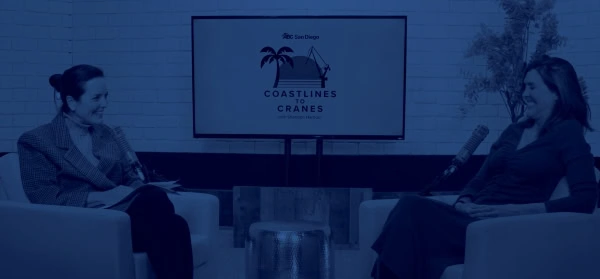
Good morning, San Diego. Welcome back to another episode of Coastlines to Cranes. This is our signature series, My Outside Voice. And I'm here today to talk to you about something that is very much my inside voice and sharing with all of you. It's about mental health. So you know May is Mental Health Month, and we've had a lot of discussions about suicide prevention and the construction industry. And that's great. We are doing a lot of work, and I'm going to talk about that in a little bit. But let me take a step back and say, how did I get here?
How come I'm talking about mental health in May right now, especially in an industry that doesn't talk about anything related to feelings? So take a few steps back. Let me go back to the first call that I got from Aaron Braun. And he's still with ABC National. Our national office is a wonderful resource for all of us and that work at the chapters that provide resources for our members to add to the value proposition. So I share this because Aaron called me and I picked up the phone and he said, hey, Shandon, would you want to be one of the chapters that starts working with suicide prevention and you get train the trainer and then you can start working with different groups of people?
And I said, you know, I don't know. Like, do we want to do this? Are we going to dabble into this world? Because it was very much my personality to say, that's the soft stuff. Like, we don't need that. And that's just another layer. I'm not sure we want to start talking about suicide. And what does that mean? And then what kind of can of worms does that open? So I was reticent. However, when I went to the first training, I realized, oh my goodness, there is a huge issue here. And again, part of me thought, don't go there.
Don't just keep a lid on that. Keep a lid on that. We don't want to do this. And I said, no, let's do it. We have to embrace it. Because somebody out there in our ABC San Diego, I was thinking my San Diego civilization world with that hat saying, okay, somebody out there might be struggling. And what do I do if they come to me and I am ill prepared to deal with it, much less what if they are an apprentice and they come to our instructors and are they prepared to deal with it? Or what if there's somebody out there that needs to go to our members and how do they deal with it?
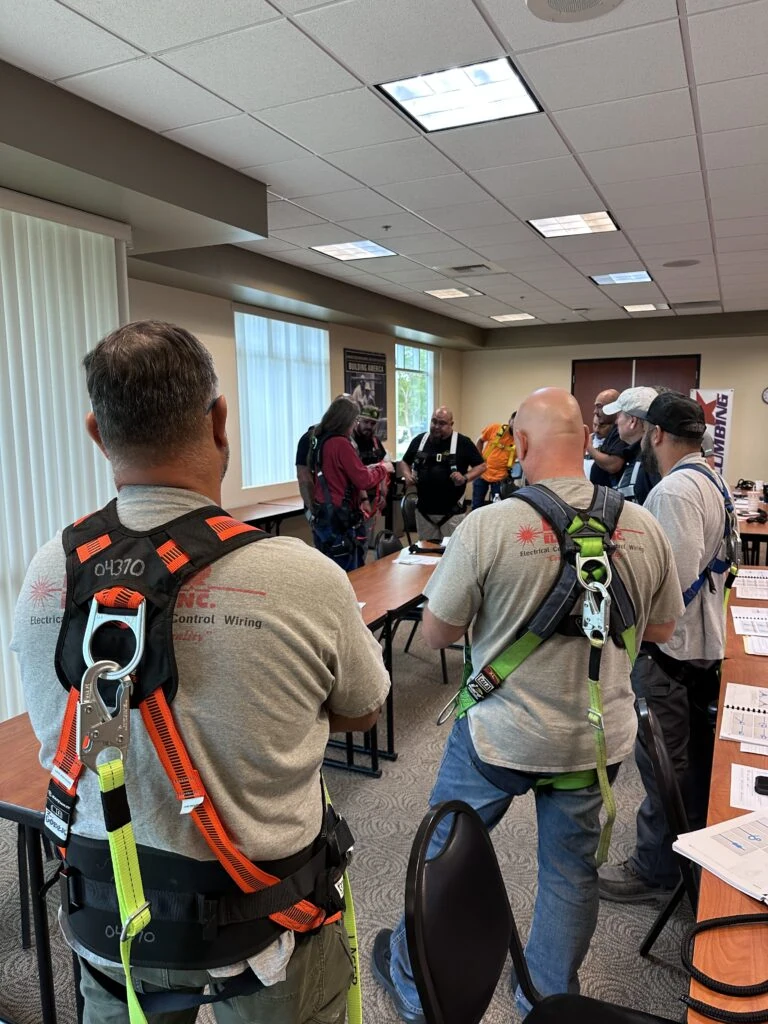
So going through the training on it, I understood very quickly that this is a very relevant and major issue in construction where the second highest rate of suicide in any industry. Construction is the second rate, second highest rate of suicide. So I learned about it. We start doing trainings. We start working with our apprentices and it's overwhelmingly successful. The apprentices are really appreciative. The students in the class, the members have reached out to us to say, hey, can you come do it at our company? We do it at no charge. We provide all of the training and all of the supplies and all of it.
It doesn't cost our members one penny. And so it's been a very eye-opening journey for me. And that brings me to my next point with May being the mental health month. So yes, that's important. Doing suicide prevention, having this program, talking about it is important. But the reality is this is an industry that doesn't talk about feelings and we're just constantly on the go. So I said, okay, we need to take it a step further. Introduced to Pete Smith of Confide, actually based out of Australia. And Pete and I have a conversation. He's got a program that he kicked off with the rugby league down there, the professional rugby league in Australia.
And I said, well, how's this program that you've used with your rugby players going to work with the construction guys in San Diego? And he said, well, look, it's just a little check-in to see how things are going. And you, you know, you pulse your apprentices or your team or your members can pulse their employees and check in on how they're doing. And Pete and I had several conversations and finally I said, I'm interested. I like it, but why don't we do a pilot on our staff? So we rolled it out about a month ago and it's a simple email check-in and everybody checks in.
I can do it as many times as I want. I can set it. I can schedule it. I don't see the information. So really it's anonymous. So that protects them. But here's the big eye opener for me. People are struggling with a lot out there. And even though I'm usually a very, very upbeat person, especially for this podcast, it's a little bit more, you know, conservative and straightforward. And just, this is the real deal here. As much as I want to pretend that birthday cards and lunch and learns and these types of things are the key to employees to building this culture.
It's so much more than that. Those are all superficial things. And I'm not denying that those have a place, but for my entire life, I remember working in our family business and I would be like, it's employee appreciation week. Yay! You know, everyone gets this and that and the other. And what I've learned through Confide and our mental health journey and checking in with people is that a lot of people are struggling with frustration or overwhelm in the workplace, or there's too many things that they're juggling. And with all of the fast-paced things that we're dealing with today, there's a lot on everybody's plate.
It's just a lot. And so when I started seeing the check-in numbers from Confide, from our program that we've implemented, I sat back and I said, oh my gosh, what do I need to do here? Because people aren't really generally happy all the time. And yes, there's a benchmark. We will see trends. But the overwhelming responses have been that there's a lot going on in people's worlds. And they struggle day to day. So you take all the information that I'm learning from Confide and you take all the information that I'm learning about construction and the high rates of suicide.
And I present this to you as the listeners and using my outside voice. We really have to lean into the people-centered leadership or the employee-centered leadership and really getting to understand the people that work for us and in our businesses every day to have them feel comfortable speaking up and saying, it's okay to not be okay. And when they have those moments that we provide those personal days as employers, and we provide those opportunities for them to be able to deal with some of the personal things that are happening, because really you can't have an employee come to work fully engaged unless they know that the other stuff in their world is going to be handled or there's a way for them to cope with it.
So I've come to my last point here. Mike Bellaman and I were on a conversation last night, actually. And Mike is our national CEO of the Associated Builders and Contractors nationwide. And he's brought up two really good points for me. He said, you know, Shandon, and this started last year, he said, our strategic plan now includes employee value proposition. It's as much about the employee as it is about the business and making sure that our employees feel valued and that the companies that are ABC companies, that we are providing the tools and resources for our employees.
That's the first conversation that he and I have, and we continue to have. And the second one is, he said last night, Shandon, you know, it's really about total human health. And said, National's been working on this for four years, including total human health and in the total safety analysis for businesses, that it's not just about the physical safety. It's so much more about the mental health safety. And when you think about how people are struggling with everything on a financial business, on a financial level, childcare, the sandwich generation where you've got your elders and your youngs and the generation that's raising those folks and how they cope with all of these things.
It's what we can do as employers to be better at people-centered leadership, checking in with people, making sure that they feel heard, making sure they understand that there's a place and that they have people to go to when they have, it's when they're not feeling okay. And that it's about the total human. And that's just as important as any business. And so in honor of May as Mental Health Day, I bring you this podcast outside my outside voice, because your mental health is just as important as your physical health. And so with that, San Diego, that wraps up another episode of Coastlines to Cranes, my signature series.
And you know, stay classy, San Diego.