Transcript
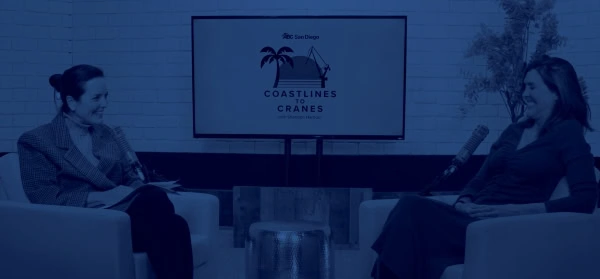
Good morning, San Diego. Welcome to our podcast, Coastlines to Cranes. This is where we talk to the people, the culture and the job sites and everything in between. I'm Shandon Harbour, your host. And today we have with us two very, very special guests that I had the privilege of meeting through connections, talking about the crisis with fentanyl in our industry. So welcome today, Terry and Ernie. Tell us about yourselves, Terry and Ernie. We'll start with you, Terry. Tell us about yourself. You have a fascinating background. I'm totally inspired by you. And I want to hear, tell our audience, you know, your background and all about yourself.
Okay. Thank you. Good morning. I'm happy to be here. I was a deputy district attorney in the County of San Diego for 31 years. I recently retired. But during the last 10 years of my career, I was working in management. I think one of the most impactful areas that I worked in was in the narcotics field. I was the chief of our major narcotics division. And then I was the chief of our South Bay region. And during that time, when I worked in narcotics, fentanyl really spiked in our county. And we created overdose death prosecution teams that investigated cases.
We did a lot of outreach. And it just became something that was very important to me to continue working in that area. So when I retired in March, I began working with the CDC Foundation. Ernie and I work as partners in what's called the overdose response strategy. I'm the CDC Foundation half of the partnership, and I'm the public health analyst. Wonderful. Welcome. So nice to have you on the show today. Thank you. Thank you so much. Ernie, tell us about yourself. Yeah. Good morning. So my name is Ernie Limon, and I'm the drug intelligence officer with the high-intensity drug trafficking area that covers San Diego and Imperial County.
Prior to that, I was a special agent in charge with the California Department of Justice, Bureau of Investigation. And I've been with Cal DOJ for more than 30 years, predominantly working narcotics. But I actually have also worked sex offender investigations, money laundering, and human trafficking. So like Terry said, I've been here with Haida since March after I retired with the Department of Justice back in December. Wow. Incredible backgrounds, both of you. It's so nice to have all your expertise on the show. So for our listeners, I get an email from Terry and Ernie, and they say, hey, you know, fentanyl is killing people in your industry.
We need to talk to you. And I said, oh my goodness. So you and I, we all got on a call. We did a presentation together. I thought the information was so powerful. Had to have you on the podcast. So let's get right into it because I know we've got a lot to talk about today. So the first question that we want to ask is, how come the construction workforce is so key? Starting the question over again, how come the construction industry is one of the ones that fentanyl is hitting? And why is our workforce so vulnerable?
Well, as you mentioned, the construction industry does have the highest rate of overdose deaths. And that's why we reached out to you. Compared to other industries, it's significantly higher. We have seen fentanyl emerge in our county since 2017. 2016, there were 33 overdose deaths. And between 2017 and 2021, it rose to over 800 deaths in our county. So it's a huge issue for everyone in our community. But because of the stats in construction, we thought it was so important. We really appreciate you taking our cold call when we reached out to you. But if you want to talk about why the industry is vulnerable.
Yeah. So Shandon, obviously, with the construction industry, you have physical labor. So they're more apt, the workers, to get injured and have accidents and stuff. So what ends up happening is a lot of times, though, going to the doctors, get prescribed. And frequently, they're prescribed opiates, right? Right. And so once their prescription is over, sometimes they get addicted to it. And other times, they want to continue on the opiates outside of their prescriptions. Fentanyl, for example, a lot of times, people find it in the streets cheaper than opiates, right? So they get hooked on fentanyl.
Sometimes they think that they're getting oxycodone, for example, Vicodin on the street level in a pill, but it actually contains fentanyl. So a lot of times, they don't even know that they're consuming fentanyl. They think they're taking a pill that was purchased from a friend or somebody at the workplace. And sometimes they are specifically seeking fentanyl because it's 100 times stronger than morphine and 50 times stronger than heroin. So once they start that, it is so strong that they become addicted and they want more. It is an epidemic, or I guess I would say, you know, critical issue here in our industry and construction.
And that's what really captured my attention when you both reached out to talk to us about why it's impacting our industry. A lot of times people ask me, are there any stories that you can share with us that demonstrate how it's impacting our industry? And I know that there's a lot of information that's, you know, not allowed to be shared, but can you share generally like what a story might be that resonates with our industry? Sure. Back in September of last year, in Coronado, two workers at a residential site overdosed and died. They were gentlemen that were in their 50s.
I believe they were painters. This was in Coronado. And the case is still under investigation. So a lot of the details haven't been shared. But that's, you know, two people that died at a site. And I don't think anybody wants to be making that phone call to families, to loved ones. And I'm sure it's impactful on the entire crew. Everybody that's working there is touched by something like that. Absolutely. There was also a young man by the name of Connor Gephardt. And I reached out to his father to make sure it was okay to share his story.
And they're very willing to share the story because they want people to know. And he was a 31-year-old that was a successful athlete in high school, went to La Jolla Country Day, went on to college, became a civil engineer, and was successful in college as well as an athlete, led their team to a national conference, and then went to work for a very large construction company here in San Diego. And along the way, he'd had injuries from sports, he'd had surgeries. And as a result of those surgeries, he became addicted to opioids. And he was also struggling with depression and anxiety.
And that's something else we often see in these overdoses. People have a combination of the addiction and mental health issues. And he did. He struggled with some of those issues as well. And he passed away at 31. And it was a fentanyl overdose. And the whole community that knew him suffered, the parents. He was married, just successful in his career, had made it to the position of an assistant project superintendent. So he was doing well. Right. Wow. You know, that really brings it home when you have a name and a person to talk about where this really impacted family and the company and the community.
And then you mentioned those two painters and you said Coronado. I was like, that's home. Like, we know Coronado. These are real people, real lives, real stories. So thank you for sharing that. I don't know, Ernie, if you wanted to piggyback on that. But yes. So Ernie, the question for you is, what practical steps can construction employers take right now to reduce the risk and increase awareness and be prepared to respond? Well, there's a few. There's some extensive educational plans of fentanyl and overdose prevention plans that they can take. Most of it is educational. But what we like to see is, number one, recognize that exists, and since it exists, is have naloxone available.
So have naloxone available at the work site, whether it's in a common area or workers actually possessing it. That's huge for us because we know that carrion naloxone, also commonly known as Narcan, prevents overdose deaths. And we want to have that out there. You know, the other thing is maybe changing the culture of
management and the workers not feeling that they have to work through injuries, right? That recognizing that if they do have injuries, that they focus on that and not having them work through the injuries, where that would promote having to be on some sort of drugs. The other thing is promote non-opioid drugs, whether that's through the employer or through workers' compensation. For example, non-steroid inflammatory drugs like aspirin, ibuprofen, right? Stay away from opiates that are very addictive.
Wow. That is such great advice. I love hearing that you say changing the culture in the company. That's so key, you know, having a person-centered approach where we're not pressuring them to just gut through it, right? Like really understanding and being okay with letting people speak up when they're not well. Like that's changing the dynamic in construction as well. Exactly. You see that in a lot of male-dominated industries. We see it in law enforcement. Nobody wants to complain. Nobody wants to talk about their feelings. And it really does have to start at the top, having the leadership communicate to people that it's okay to express, if you have an issue, to encourage the line supervisors to reach out to their people, checking in on them, not just, hey, how are you doing?
Fine. Yep. Okay. All's good. Now, how's your family? How's your health? Really encouraging them to talk about that and seek help and making that help available to them. Absolutely. And we talk a lot about that in our suicide awareness as well. Just making sure that we're checking in with people. And then, especially as you mentioned, Terry, on the male side of things, we know that that's not always where they want to share. They don't want to say things are not okay. Like you mentioned law enforcement, military, construction. And so very much, it's like, we're not going to let people know that we're not okay inside.
But we're trying to change the culture to say, it's okay to speak up. It's okay to say, I'm not okay, and reach out for help for sure. Yes. And there's also a lot of stigma surrounding substance use disorders. So people often don't talk about that. They use the substances in the dark, which is why we encourage having the naloxone on-site because sometimes they're using in restrooms, port-a-potties, and areas like that. So I think you really have to work on eliminating the stigma. Absolutely. And so one of the questions is, if you could tell every construction leader some advice or something about how to address fentanyl in their workforce and in their company,
what would you tell them? Why does it matter now? Well, it matters because it's reality. And I think it's recognized that fentanyl is there and then take appropriate steps. And the number one things that we're pushing right now is having naloxone available at the work site. Absolutely. And you guys partner with Bill Perno, who does a lot of the presentations with you. We were all in a presentation together. And he'll come out and bring naloxone and train us how to use it and everything. I don't know if you wanted to mention something, Terry. Yes, I think that the leaders of the industry need to know that your employees are dying at a higher rate than any other industry.
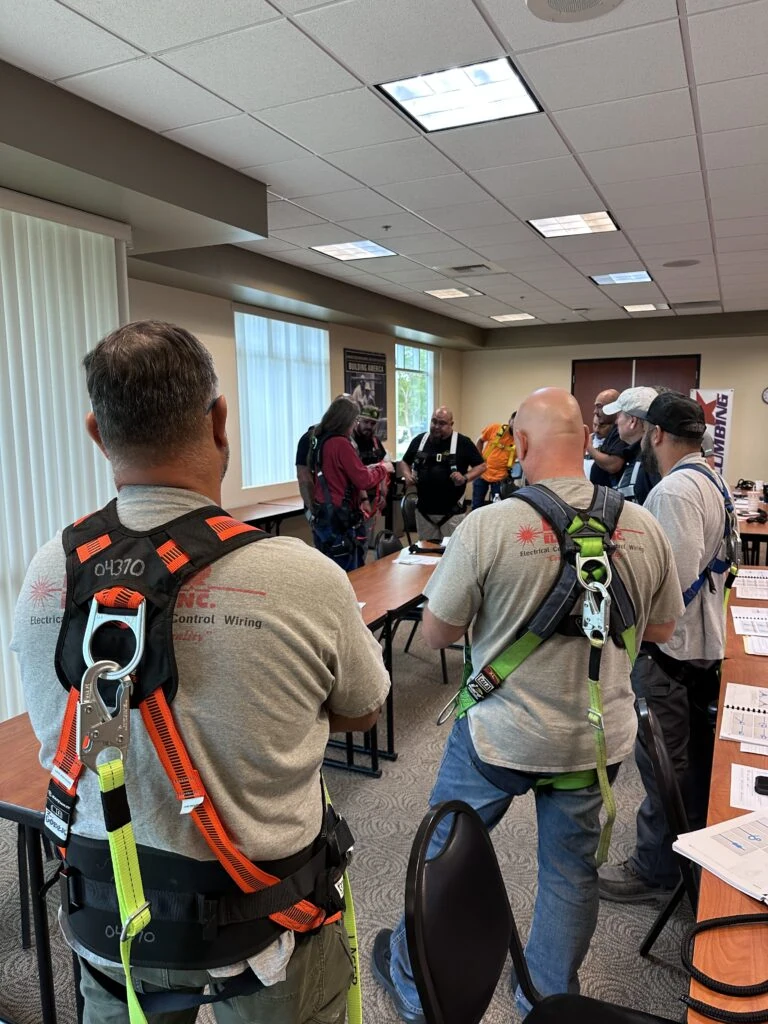
And there is help available and it's free. We will do trainings. Bill will do trainings. We will provide Narcan and any other help we can provide. So they can save lives. They should do it now because you can make a difference. Absolutely. Thank you. You know, it's interesting. When you first came to me and had reached out about the crisis with fentanyl in the industry, I thought, oh, boy. I don't think it applies to our members. This might apply to somebody else. Isn't that the first thing that we all think doesn't apply to us? But when you did the presentation and we were there together and you asked, there are certain things.
Are you familiar? Have you been to parties where fentanyl or have you been, have you seen somebody pass out from an overdose? And the hands went up. And I thought, this is real. Like, this is not somebody else's problem. This is our problem. And so immediately, I gravitated to you and said, okay, how do we get the message out there? How do we inform our leaders? How do we inform our owners, the listeners, whether you're superintendents, foremen, managers, and whatever that might be to get the message out? Because it is a crisis in the industry.
Yeah. Yes. And it's not always happening at the work site. I mean, most deaths actually occur at their homes. Right. So they may not be aware of it. But if you just ignore it, it's not going to help anything. They have to be aware that there are people that are working with them that are struggling and training on how to recognize the signs of addiction. And overdoses is also something that's really important in the industry, and in any industry. People need to know. Absolutely. And Shandon, you made a great point, because it's not particular to any industry, and nobody's exempt, including law enforcement.
I've seen examples of law enforcements get addicted to drugs, to fentanyl, take fentanyl. So it's occurring through every industry. And, you know, me and Terry have personal stories we could tell about family members, too, that have struggled. So it's every person in every occupation that this affects. Drugs don't know borders, right? It doesn't know borders. It doesn't know socioeconomic status. It doesn't know specific industries. It's a community issue. And that's one of the big reasons why we have you on the podcast today to talk about how we can see the signs, what we can do as leaders, how we can understand it, and understand that this is all of us.
It's a community. It takes a village. And so, yes, part of me wanted to say that's somebody else's problem. But today, we're here to talk about how this is real, and we're here to help. So how does somebody find you? Tell us where do we contact? If a listener is out there right now, and they want to understand, okay, I'd like to get in touch with Terry or Ernie, what's the best way that they can contact you? Of course, they can call ABC San Diego. But I don't know if you want to mention how to how to best reach you.
Yeah, the easiest way actually to do that, if you Google the high intensity drug trafficking area, the overdose response strategy. Okay. You'll find 31 to 33 HIDAs throughout the nation, and you'll see San Diego. If you select San Diego, you'll come up and you'll see myself and Terry on that, and our contact information will all be on there, amongst a few other resources there. Wonderful, wonderful. So we will make sure we get that out in the notes and everything on the podcast. And they can also contact ABC San Diego as well, and we'll connect them to both of you.
You do go to their site to do presentations. Is there any charge for that? No, it's free. We'll go anywhere. We can do it in person. We can do it on Teams or Zoom. We can do it at lunchtime. Wow. I think Bill mentioned that he's gone to construction sites. We're happy to travel. Wonderful. Well, thank you both for joining us this morning. It's so nice to have you. Nice to see you again. Thank you for the good work that you're doing in our community and everything that you've done before in your previous lives. Tremendous work that you do for us in San Diego.
So thank you. And folks, that's it for this edition of Coastlines to Cranes. If you liked us, give us a like, hit subscribe, give us your comments, and you know, stay classy, San Diego.