Transcript
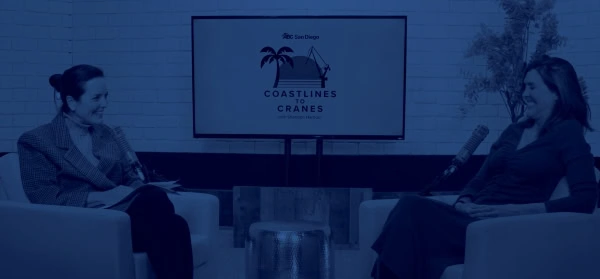
Good morning, San Diego. Welcome back to Coastlines to Cranes. This is where we talk about everything in the construction industry from the coastlines to the towering cranes, the people, the culture, the leaders and everything in between. Today, I am so excited to welcome our guest, Matt Gorham from Rancho Mesa Insurance. Matt is amazing. He came and found me. He's a new member of ABC San Diego. So excited to share his story and also a little bit about Rancho Mesa. They came to us differently. They're here to learn about small, mid-sized contractors. So, with no further ado, welcome Matt.
So nice to have you here. Yeah, I'm excited to be here. Thanks for the warm welcome, Shandon. Yeah. There's a lot of overlap. Like, we've talked about a lot of history between ABC and Rancho Mesa. So, I'm excited to be a part of that and just grow on the legacy. Absolutely. Which I've already been laid for. Oh, my gosh. So, the first time you and I had a chat on the phone, you are a new member of ABC San Diego and Rancho Mesa and learning about you. You've been in San Diego for how long now? 20 years. 20 years already.
Right. But, not native. No. So, this is going to be a little bit of a point of contention for people, depending on how well they can read maps. Right. Native Southern Californian. Yes. And even that, some people could contest. Because I wasn't born in Southern California, but I've spent my entire life in Southern California. Right. But 20 years in San Diego. Right. Exactly. So, 20 years in San Diego, native Southern Californian, and I'm a native San Diegan. So, we were chatting on the phone and I was like, oh, my gosh, you know, going up to Oceanside, that's actually Northern California.
That's not even Northern San Diego, right? And you're like, yeah, but it's funny. So, share like your insight on the world of San Diego. Yeah. So, it's interesting. To that point, actually, Brenda in our office, she's from East County. And she asked me the other day, because one of our other coworkers is from Walnut Creek, and she stops, she goes, hey, Matt, aren't you, you're from Northern California, aren't you? And I grew up in Ventura County. Right. So, you know, it's the wrong side of L.A., but, you know, it's still Southern California, in my opinion.
Absolutely. Ventura County is Southern California. It's south of Santa Barbara. Yes. And for me, that's kind of where the line stops. Right. And so, Brenda stops and she goes, you're from Northern California, right? I said, I wouldn't call it that, but, I mean, I know you're from here. So, yeah, to you, I'm from Northern California. She goes, oh, Jane's from Walnut Creek. Yeah. I was like, that's it. That's nowhere near each other. But, you know, again, kind of reaffirmed the point of how San Diegans look at the rest of California, their place within it. Absolutely.
You know, the natives, we have this different lingo.
You know, it's all about flip-flops and Bermuda shorts. And East County is like, East County, its own provincial area, you know, down south of the eight is a whole nother area. So. I got to ask on that topic, though. Where does Poway fit in with this? Oh, my gosh. Because I feel like that's another point of contention and argument, depending on who you ask. Oh, my God. I love that you brought this up, Matt. So, now that our training facility is in Poway, and I live in Scripps Ranch, which I grew up in Point Loma.
So, that is actually a flight leaving Lindbergh Field. To those of us in Point Loma, like, oh, my gosh, you're so far out there. So, funny story, I'm on the ski slopes as a kid, I don't know, teens, 20s, and I go up on the chair with a young man. And he's like, oh, I'm from San Diego, too. And I said, oh, you're from San Diego. Where are you from? He's like, oh, I'm from Poway. Well, at that time, it was a two-lane road out to Poway. And I was like, that's not San Diego. That's like Poway.
That's a whole universe out there. Country, horses. Now, I'm living very close to Poway, and our training facility is in Poway. So, yes, you were right. Poway is like another world. San Diego is here. And if you leave Point Loma and you go past Fashion Valley, then, you know, you're actually leaving a whole other universe. So, love that conversation. And I can relate to that because, you know, I came down here to go to UCSD. And so, living in PB and UTC and La Jolla, I didn't want to go east of Claremont. I was like, I don't know what's out there.
I remember going to Tierra Santa for the first time. And I was like, where am I? This feels so far away from everything I know. And, of course, I live in Santee now. Right. So, I'm like, Tierra Santa, oh, that's nothing. So, I mean, I've been in East County for, I think, eight years. Yeah, about, no, almost nine years, probably. And so, it changes your perspective, right? Right. As you kind of go through different phases of your life. And it is funny to still talk with people that are either new to the city or that don't know anything east of the five.
Right. And they're like, where do you live? Right. It's okay. Maybe one day you'll see it on a map. I don't know. There you go. I just really could appreciate and relate to that conversation that we had. So, thanks for indulging me today on our podcast. But let's switch over and talk about Rancho Mesa. Love the lunch that we just recently had with your whole team. It was wonderful. I really want to applaud Rancho Mesa Insurance for coming in differently than other members that I've seen join. You really came in with this idea of listening and learning and trying to understand what our members need, especially in the small, mid-sized construction industry.
So, talk more about Rancho Mesa. Yeah, I appreciate that question. And I want to thank you again, you and Jay, for making the time to come out and sit down with us. Because I know that there are a lot of demands on your time, Jay, as a business owner. I mean, you've got to be everywhere. You're in Sacramento. You're in Washington. You're running so many things. But for us, you know, it's a different philosophy where we're really trying to solve problems. And Dave is a big fan of the concept of spin, you know, situation, problem, implication, need.
And if we don't understand what the situation is, how can you deliver solutions? So, I know it's really common to see different companies or agencies or whatever that industry might be try and partner with any group and say, how can I get something out of this as quickly as possible? And I think it's just a different approach for us, which is how do we contribute to be able to make a difference? And if you are willing to listen first, you're going to find what the needs are and why those needs are, what the current situation is and what the solutions are and where they're succeeding and where they're falling short.
So, rather than coming in and just throwing money at you and saying, okay, great, we're now on your email newsletter or we're going to be the drink sponsor or something. It's like, hey, we're happy to do that as well. But let's understand how do we make a meaningful difference, especially with what we're seeing with the insurance landscape right now, where there's a lot of change. And some of it's forcing some difficult decisions on business owners where maybe there might be a gap in understanding. And I think part of that is just a reflection of what insurance is as a service or as a product itself, where, let's be honest, nobody wants insurance until you need it.
But when there's a misunderstanding of what it is, that creates a real negative perception around what the whole service, what the whole industry is. So, we wanted to really understand and always want to continue to understand how can we do it differently? How can we do it better to serve the purpose that it really fulfills within a business? How to make it an asset for a business owner rather than just being a liability? Wow, that's a powerful statement right there. How to make it an asset rather than a liability. That's amazing. Yes, you know, I really have to applaud you and your team and the meeting that we had together because you were asking a lot of good, thoughtful questions and really digging in.
And Jay was there as well. We were talking and sharing about, you know, the reality is small, midsize contractors in the construction industry are just out there trying to make it every day, right? I'm a good electrician. I started my own electrical contracting business.
Maybe my wife and I, we're doing it. We got a couple trucks out there. And our insurance renewal comes along and it's like putting it off, putting it off, putting it off. And then, oh, my God, I have to renew it again no matter what it is. And so I'm sort of hostage to that cycle. And our big message with our listeners and our members and everybody is, hey, before you get to that point, give Matt a call and have Rancho Mesa Insurance come in and talk to you about your options because you have options.
You don't have to be held hostage to your renewal every year, you know, at the last minute, increased premium prices, whatever it is. Invite Matt and the team in and they'll learn about you and they'll learn about your business. They really understand the construction industry so they can tailor it to what you're needing, what you need. And so I really appreciate that. We were chatting also about having some seminars and some education and some different thought leaders coming in from folks that you guys know that would be really helpful to our members. I don't know if you want to talk a little bit about that.
But just like you said, it's not something that we're looking to maybe do sponsorships with you. That's, like you said, one piece of it. But the real meaningful piece is raising the industry collectively. And some of the options that we talked about with, you know, with education, I guess, if you will. Yeah. You said that really well.
Hey, maybe I should go on your podcast. Yeah, you should. You should. I'm excited for that one. So I'm going to hold you to that. Okay. Especially since you've now just offered it up. There you go. Before it was an invitation, but now you're suggesting it. Okay. So absolutely. And to be honest, Shandon, there's a lot to respond to in that. And I appreciate the endorsement. You did have a chance. Of course, you already knew Daniel. Right. And you've met Sam. Daniel, good friend. Yeah, that's right. I'm always going to hear, it's Daniel now. Yes, it's Daniel now.
I can't not. And of course, he's going to give me grief. Danny, if you're listening, I'll always know you as Danny.
Thank you for doing that. Thank you for doing that. So I didn't have to. But and getting to meet Dave, and you already know Ann, and you've met Andy. And there's so many, again, kind of connections that we have and wanting to support the construction industry.
We've got kind of a different practice focus or three different practice areas, rather than what we've seen from a lot of other agencies, which is, you know, a lot of them take the approach of go out and write whatever you come across. But we've really honed in on saying, we're going to focus on construction, we're going to focus on landscape, and we're going to focus on human services. And so being able to develop experts in those areas, and then taking them another step farther, instead of just being your construction account executive or construction broker, we want you to understand these trades really, really well.
And so for me, it's HVAC and plumbing contractors. So I need to know these trades. And that's a constant challenge from our whole agency, because we hold each other accountable to know the ins and outs and understand the market, and especially in a situation like we're seeing from the insurance landscape, which is evolving so quickly.
And being able to then deliver that to the business owners that need it, and not just to them, but learning from them, because they're seeing the changes, you know, how are tariffs impacting things? How are refrigerant transitions impacting their operations? How are hiring practices or law changes impacting decisions they make day to day, hour to hour even? And being able to align with them, partner with them, of how do they better make decisions that guide their business as stewards, right? Instead of it just being to the scenario that you described, it's a last minute, I'm going to put off insurance because I hate it.
I don't really understand it. And even if I do, I hope I never have to use it. And so there is kind of this mindset that people fall into, I've come to learn as the invincibility fallacy, which I can relate to as, you know, being a teenager and thinking nothing bad will ever happen to me. But with the business, the point of it isn't to set it up to shut it down the first time you face adversity. It's to be able to persevere through any of the challenges that may come. So building a resilient business that's going to outlast you and your professional career.
So being able to align with advisors that can help you navigate those challenges rather than just churning out a policy right before your effective date is so that you can issue a cert to get on the job. Sure, that can work. But what happens when you face that claim, that lawsuit, that, you know, the problem that really threatens the survival of your business, that's when people are like, I need to know insurance better than I ever have. But if you don't invest the effort into understanding it, or you are working with somebody that maybe doesn't understand it as well themselves, how can you put yourself in a position to be able to effectively navigate that?
And obviously, there's the other component to this, which is maximizing your proactive approach or maximizing the processes and procedures that you have in place to avoid those situations from developing or knowing how to handle them when they do, both before and then immediately after to mitigate the risk, mitigate the damage that arises from it. And that's where Rancho Mesa has, I think, really developed this whole range of tools and resources that help us set ourselves apart. And not just kind of the standard line that we hear from a lot of agencies or secondhand, I don't talk with them directly, but that I hear from a lot of the companies that we work with of strong carrier partnerships.
That is crucial, very crucial, especially for those carriers that do offer a lot of risk control or risk mitigation services. But at the broker level, being able to do, well, I'll talk about the workshops in a minute. I guess I wasn't quite as good at bringing this all together as I wanted to be. I'm completely fascinated. I have another question, but keep going. Yeah, Safety One, you know, as a proprietary app that's a library of resources and so much more than that of being able to help our client partners really embrace the 21st century and centrally, digitally record keep and access, you know, JHAs or observations and accident report forms and being able to increase the timeliness and consistency of doing trainings.
And then going into things like claims advocacy or, you know, loss control or the workshops. You know, I know this is a real big point of pride for Dave and rightfully so. I think it's something like 66 different workshops and webinars that we did last year as an agency. And they range from, you know, fleet safety, heat illness prevention, ladder safety, you know, and there's so many different topics. And we're always looking for more of how, again, do we deliver on content and topics that are impactful to our client partners that we know is in their business and affects their business.
So how do we help to raise, like you said, kind of the collective conscience, the collective IQ and awareness of the industry to make a more positive impact? And so being able to take those type of workshops and those trainings to ABC members to help them expand their understanding, expand their knowledge, that insurance isn't just this reactive product or service, but there's also a proactive approach that you can integrate into your business, especially with a good partnership. That is, you know, being in the construction industry and hearing you say, like, I specialize in plumbers and plumbing contractors or HVAC contractors.
And just hearing you speak about your knowledge of that is makes me feel like, yes, he gets me. He totally gets me. And so being a former business owner myself in the construction industry, I appreciate when somebody coming to talk to me about insurance understands me and my business and my world and my industry. So, you know, that I think is a tremendous attribute to you and your knowledge of the industry and also Rancho Mesa Insurance Group. So very exciting. Hey, listeners out there want to know, how do I find you? Where do I find Matt Gorham?
Yeah, I think the best way is to call me, 619-486-6554. There you go. Or send me an email.
My last name is not that phonetic. So M-G-O-R-H-A-M at Rancho Mesa dot com. M-G-O-R-H-A-M at Rancho Mesa dot com. There you go. I have to ask though, because you said you had another question as I was on my soapbox for a moment. Yeah, no, it was about… Did you lose your question? The question was about the safety. You talked about Safety 1, but there's the Safety First or the program that we sort of chatted about that has similarities to STEP. That is something that Rancho Mesa clients are able to enjoy. What is that program? Yeah, so it's the Safety Star certification.
Safety Star. That was it. Thank you. I appreciate you bringing that up too because, you know, we've worked with a number of carriers and fortunately we've got some, again, really good partners that have helped us understand how do we give them more to be able to see the benefit in safety and risk mitigation where they've advised us. If we can touch on these particular topics and do, again, impactful trainings, they can be a little bit more favorable in the subjective areas of how pricing comes out.
Oh, you have everyone's attention. Well, you know… Pricing. What? Yeah. And that's the trick of it, right, is as much as I wish I could say, if you do this, this is the discount. In insurance, there's a lot of subjectivity to it. Right. But you have to understand the underlying mechanics to be able to get there. Absolutely. And it is complicated. And, again, we're seeing just shifts in insurance just due to claim costs and legal costs. And there's some other, you know, influences. Sure. That are creating a lot of upward pressure right now. And so I know that anybody listening to this, business owners, and you felt it too, is there are increases coming.
And there are exceptions to that depending on the circumstance. But, you know, it's how do we address the underlying operations? How do we address the underlying issues? To deliver that end result, which is, you know, payment savings, cost relief, whatever you want to call it. But you have to understand some of the foundation to be able to get to the end result. Well, I'm having so much fun. Like, I think we need to continue this conversation at the Studio One at Rancho Mesa, you and I. Yeah, we'll do that. But, yeah, Safety Star Certification, to answer your questions, just more of a curated series of training that when we've got, you know, a client partner that's committed to delivering that within their, you know, their labor force, then it gives us more to go back to underwriting and say, look at their commitment.
This isn't just fluff. It's not just, you know, bubblegum nonsense. It's like, hey, this sounds good, but there's no substance to it. We could actually show there's something here that these guys are doing. And the benefit to it, of course, is it actually does positively impact, you know, productivity and profitability for the guys on the job. But it also then allows us more to say, not only are they improving in what their losses are, what their claims are, but there's a reason for it. Right. And so there's an expectation that that trend will continue. Right.
Yeah. So. Fantastic. So coming up is our leadership installation event. I heard you're going to be there. I'll be there. Yes. I'll be there. So for our listeners, you can see Matt at our leadership installation event. We will all be there together. That wraps up our episode. Any parting words or anything else you want to say, Matt, before we sign off? Yeah. Well, I want to give Josh Hill a shout out, too, because he's one of our Surety account executives. And so he's going to be at the installation dinner as well. Oh, great. And I think Andy Roberts is going to be joining us.
Oh, the Rancho Mesa crew. Yeah. Yeah. Awesome. You know, we're again, it's it's about building relationships. That's the most meaningful part of this. And you get that as a business owner and, you know, as president of ABC San Diego. You understand the importance of trust without trust. I mean, what what is it that we do? Absolutely. So I want to thank you for the opportunity to be able to share. And I know there's a lot more to come from, you know, what we're going to be able to do together and just finding ways to, again, positively impact the ABC community.
So thank you. That's exciting. Definitely. It's all about the people. And, you know, San Diego is the smallest big town there is. Everybody knows somebody. Right. Yeah. I mean, it's not even seven degrees of separation. Right. You know, it's two at most. Right. People know people here. Well, I see you brought something to do.
Yeah, we can get into that. You know, I found that. So Merry Christmas.
That's to you. That's at ABC. I know that the cowbell is a common topic. It's a bit of a tradition within ABC. Oh, my gosh, this is so good. It's Willow Farrell, the cowbell. Yeah. I've got a tradition with my son that we go pick out one of those Hallmark, you know, I don't know the right word is here. Yes. Culturally relevant. The Hallmark. Topics. Ornaments. I've totally lost all my words on this. This is so good. And you saw this? We go pick those out every year. And so I saw that one. And I think I had just listened to your podcast talking about the cowbell.
Cowbell. And I thought, whoa, if you haven't watched that SNL skit, everybody has to. Obviously, you have. Oh, yeah. But then I saw that and I'm like, it's too relevant, especially this time of year. I don't know when this is going to get released, but we're recording it right before Christmas. Amazing. I love it. I love it. It's going on the tree. This is so good. Thank you so much. That's so thoughtful. And yes, it's the cowbell series and the cowbell is all about the people and a lot of what we talked about relationships and trust.
And, you know, it's the connections that make the difference. So thank you so much. That's so awesome. Happy to do it. And you, I think the last podcast I listened to was on culture and I think it was actually on purple. And today happens to be Wednesday, of course. So I wanted to keep it subtle. You are very on brand. I love it. And I did not wear my purple. Oh, shame on me. You got, that is so good. That is so good, Matt. Well, thank you so much for being here. This is a wrap of this episode of Coastlines to Cranes.
Thank you, Matt Gorham, Rancho Mesa Insurance. And listen, if you liked it, give us a like, hit subscribe, put your comments in, and, you know, stay classy, San Diego.