Transcript
Welcome to Coastlines to Cranes. Today's episode is part two of the fentanyl crisis happening in the construction industry with our guest Bill Purnow. If you missed part one, go back and listen. It talks about fentanyl on the job site. In today's episode, we're going to cover the who and what and how and signs to identify and how to act immediately. Please join us, part two. Take it away, Bill. So we're going to try and wake that person up, that unresponsive person. Shake them by the shoulders. Yell at them, wake up, wake up. And then if there's no response there, there's one more thing we can try.
If you take your hand and make a fist and take those knuckles, put them right in the middle of your chest and push in as hard as you can and rub it down as hard as you can. Not lightly, as hard as you can. That's a pain stimuli. That's called a sternum rub. So, but remember, opioids take away pain. They can induce anesthesia. We don't see any response now. We need to act immediately. Our first step will be call 911. Report that person not breathing, not responding. Get those first responders en route. The second step we'll do is to administer naloxone.
And it comes as a nasal spray. It's very easy to use. I'll include a link, the resources here to a video from the sheriff's department on how to use naloxone. It's very simple, easy to use. It's a nasal spray. It goes up inside of the nostril. Once it's inside the nostril, you push the plunger all the way down. There's one dose of medication in that device. Leave it in there for about five seconds. That one is done. If the person's not breathing, we then start CPR on them. If they are breathing, we want to put them in what we call the recovery position.
We don't want to leave them on their back or their stomach because there's a chance they're going to throw up. And the vomit can block their airway where they can't breathe or aspirate into their lungs and cause some nasty infections. So we want them on their side to where if they're going to throw up, the vomit will come out of the mouth. And then hopefully also the tongue is not blocking their airway if they're unresponsive there. And then the other key thing is we stay with that person until first responders arrive, which brings us to the next point to make.
California has an overdose protection law. It's called a Good Samaritan law, but there's also a Good Samaritan law for administering CPR. I like to call it an overdose protection law because that's what it is. Now I always, uh, preface this by saying it's not a free pass to go out and use drugs and get high, but this is a state of California saying it is more important to save a life when there is a drug overdose. And this is from any type of drug overdose than to make an arrest from these specific crimes. If a person is high on drugs under the influence of drugs, that will not be a crime.
If they have, uh, drugs for personal use, personal possession will not be a crime. If they have drug paraphernalia, the stuff used to ingest drugs into the body, that will not be a crime. This law protects the person that's overdosing as well as the people that are helping, uh, at that scene. And this is for any type of drug overdose. So it's not just fentanyl or opioids. It's any type of drug overdose. Uh, that's what the law protects from. Now it's also important to note that this law is not absolute. So it's not going to protect the person if they're driving under the influence of, uh, a motor vehicle under the influence of alcohol or drugs.
It won't protect you from that. That vehicle becomes a deadly weapon. It doesn't protect the people that are selling or furnishing those drugs to a person. Uh, and that the limitations are to those three specific crimes, but that law saves lives. And you might be wondering right now, how many people in San Diego or California know about this law? I've given now over 1,500 presentations and I'm no longer surprised. The law has been around since January 1 of 2013. And I'm, I'm just disappointed that there's not a wider awareness about this law in the community.
And by the way, if you've got kids, uh, young adults, teens, please talk to them, make sure they know about that law because sometimes kids are afraid to call for help. They're worried about getting in trouble. And there is another law that protects when a person is under age and it's alcohol related. So sometimes our youth don't understand that you can die from alcohol poisoning by itself. So we want to make that call, get those first responders in route. Now there are some limitations to naloxone, Narcan. Number one, it only works on opioid overdoses. It won't work on another type of overdose.
But if we're not sure, we give it to that person. If it's some other type of medical emergency, it's not going to help them, but it's also not going to hurt them. And you can't get high. It can't be abused. So the way naloxone, Narcan works, the nasal spray, it goes, it's into the body. And then the naloxone will go to the opioid receptor we have in our brain. Our brain prefers naloxone over the opioid drug. So it will kick the opioid drug off those receptors and take its place. Now it's also really important to understand that there's limitations to naloxone.
That medication only lasts in the body for 30 to 90 minutes. It's going to wear off. Two, it does not, it does not eliminate the drug that's causing the overdose that is still in the person's body. It's just been kicked off the receptor and it's being blocked while that naloxone is active. So some of the drugs like Oxycontin can last in the body for up to 12 hours. So when the naloxone wears off after 30 to 90 minutes, the drug is still in their body. It'll come right back, reattach that opioid receptor, and the person can overdose again.
Now it's also important to note, we cannot give a person too much naloxone. But what we do want to do is if we don't see signs of life after that first dose of naloxone in the nostril, every two minutes, we can give another dose of naloxone. Just try and remember to switch to the other nostril and then back and forth there. So you can't give a person too much, but we do want to spread it out two minutes apart. Now, if a person has a substance use disorder, addiction, the naloxone is going to kick the opioid drug off that receptor, hopefully saves their life, restores their breathing, but they will also go into withdrawal symptoms.
Even though the opioid drug is still in their body, it's being blocked by the naloxone from reattaching to the receptor, which can cause a person to go into very painful withdrawal symptoms, which may cause them to go out and use opioids again, trying to get rid of those withdrawal symptoms. And they don't, they may not realize that the naloxone is blocking it. So when the naloxone wears off, the old opioid hits the receptor, plus potentially the new drug that they use so that it's increasing the risk for an overdose when it wears off. At the hospital, they can hook you up to an IV drip for naloxone.
So two minutes between doses until we see signs of life. Each box of naloxone has two doses in it. And if you have more than one box, keep giving it every two minutes. So informative, Bill. Wow. I'm really glad that you mentioned the Good Samaritan rule as well, because a lot of people are not aware of that. And especially our youth, you know, they're, they're afraid to call 911 if they've been using or, you know, they're, they're witnessing an overdose. And so they try to figure out how to cover it up. Great that you mentioned that.
I really appreciate it. Also love that you went through the steps with Narcan and, and how to continue to administer it and everything else. Such a wealth of information. Really loved you having on our, us on having you on our show today. Thank you so much for your service to our community and your honesty and your candor. During this very riveting conversation, it is alarming to hear how much it's impacting our region. The one thing that does give me hope and hopefully gives you hope too, is noticing that during the last presentation, I noticed that the, the graph that was shown on the spreadsheet was that the, the number of overdoses are actually going down because of your education and your work out in the community.
So looks to see that you're making an impact out there. That is a big part of it. Yes. And I want to make a couple of other quick points if I can. One, while the number of fentanyl related deaths have been dropping in San Diego County, we still see numbers of methamphetamine related deaths that are higher than fentanyl related deaths. Um, so, uh, for example, I think in 2024, we had 494 or 496 fentanyl related deaths in San Diego County. That number was at 815, 814 in 2022. Um, we had 600 methamphetamine related deaths and that's another drug that might be unfortunately used in the construction industry.
Methamphetamine is a stimulant drug. It's the opposite of fentanyl. It's going to increase blood pressure, heart rate, make a person more alert, more talkative, but the drug dealers, again, adding fentanyl to all the street drugs, whether they're coming from the streets, uh, social media, or from a friend, uh, again, these counterfeit pills that look exactly like what's coming from the pharmacy, except they're fake with fentanyl. Um, so if a person uses a stimulant drug and a little while later you see them and they look like they're sleeping, that's not normal behavior for a stimulant drug.
I would encourage anyone that sees that to really investigate and check on that person to make sure that what you're not seeing is a fentanyl overdose, where if the fentanyl was in the methamphetamine, it can be powerful enough to overwhelm the stimulant high. And then what you're actually seeing is the fentanyl causing an opioid overdose, even though the person thought they just used or purchased cocaine or methamphetamine. The other thing about prescription medications, it's very important, especially for, um, anyone that has kids, young adults to make sure that they know that they're, um, gone are the days of sharing medications.
This is for the adult population, but especially for our youth. Again, these pills, these tablets will look exactly like what's coming from the pharmacy. You're not going to be able to tell the difference between a real pill and a fake pill with fentanyl, a fake. So convincing that oftentimes the pharmacists, law enforcement, even the crime lab can't tell the difference between the real pills and the fake pills until they test them with that CSI. So we're not saying no to prescription medications, but what we are saying are things that are very important. Uh, please, uh, make sure that prescription is prescribed to you.
And then you pick it up at a storefront pharmacy in the United States. Uh, be careful with online pharmacies, be careful with crossing the border into Mexico to maybe try and buy medications for cheaper and bring them back. And both of those situations, uh, there have been online pharmacies selling fake pills with fentanyl. There've been pharmacies in Mexico, some selling real pills, other ones selling fake ones with fentanyl or methamphetamine, uh, in Adderall pills or Adderall pills that have, uh, fentanyl in them. So we're not saying no to prescription medications, but they need to be prescribed for the person.
And then the only way to know for sure is pick them up from a storefront pharmacy in the United States. Now, you know, the source, take those medications as prescribed. And then for the overdose protection law, there were two updates to the overdose protection law that people need to be aware of. Uh, one, I don't know how widely this is in the construction industry. Cause I know you're using heavy equipment and banging stuff around, but if a person's wearing a smartwatch, a device that can measure your pulse or any type of electronic device that can measure your pulse.
Now you have to set this up in the settings, but let's say I'm wearing my smartwatch and I haven't measured my pulse. And I say, okay, if my pulse rate rate drops below 30, I have to set that up in my settings in my watch where I would normally be unconscious. If you set that up, when, if the person's unresponsive, unconscious, the watch will automate automatically make a 911 call, give your GPS location to first responders so they can find you. Uh, the update to the overdose protection law, the good Samaritan law in 2024 specifically says now, if it's an electronic device, like a watch or another device that can measure your pulse, it makes a 911 call under the law.
That's the same as a person called another update. A new law, uh, says that if a person has drugs that they suspect are contaminated with fentanyl or any other substance, and they no longer want them, they can now turn them into a public health department or to a police officer, uh, by law, possession of the drugs and possession of drug paraphernalia. When they do that will not be a crime by law. Their identity remains confidential. They don't have to say where the drugs came from unless they wanted to. It's another way to get these drugs off the streets.
And then one more thing about the, uh, overdose protection law, uh, for youth, they're worried about getting in trouble from parents to school, police, adults. It's things like maybe child protective services, active warrants for the rest, uh, housing status, immigration status. I want to make a very important point about immigration status with everything going on in the country right now. It's really important that everyone understands that local law enforcement do not, they do not ask questions about immigration status. When a person's calling to report a crime or, uh, calling for a medical emergency, they don't ask those questions because they know if they did, people wouldn't call, there would be a delay in response or other groups would prey upon that population.
And I say this because unfortunately I know of people that have died from a fentanyl poisoning because someone was concerned about immigration status and didn't make that call or delayed that call. And it resulted in someone's death. So, and I'm not singling out construction industry in any way, shape or form. Fentanyl does not discriminate. It doesn't care what your socioeconomic background is, what your job is, what your profession, how much you make, what color your skin is. Fentanyl kills across the board. So by getting more information out there, by, um, training people throughout the community and the construction industry is definitely a place, a priority for us, uh, to get this information out there.
We want to make sure that they know what to do, how to recognize an opioid overdose and where you can get Naloxone or Narcan. Right now, today, you can walk into a county regional public health center and get Naloxone or Narcan for free. You can walk into any sheriff's station in the County of San Diego and get Naloxone or Narcan for free. Uh, I'll have more resources to put up there for you. There's vending machines out there. There's all kinds of ways to get this Naloxone Narcan. If you want to go buy a box of Narcan, you can go buy it in the store.
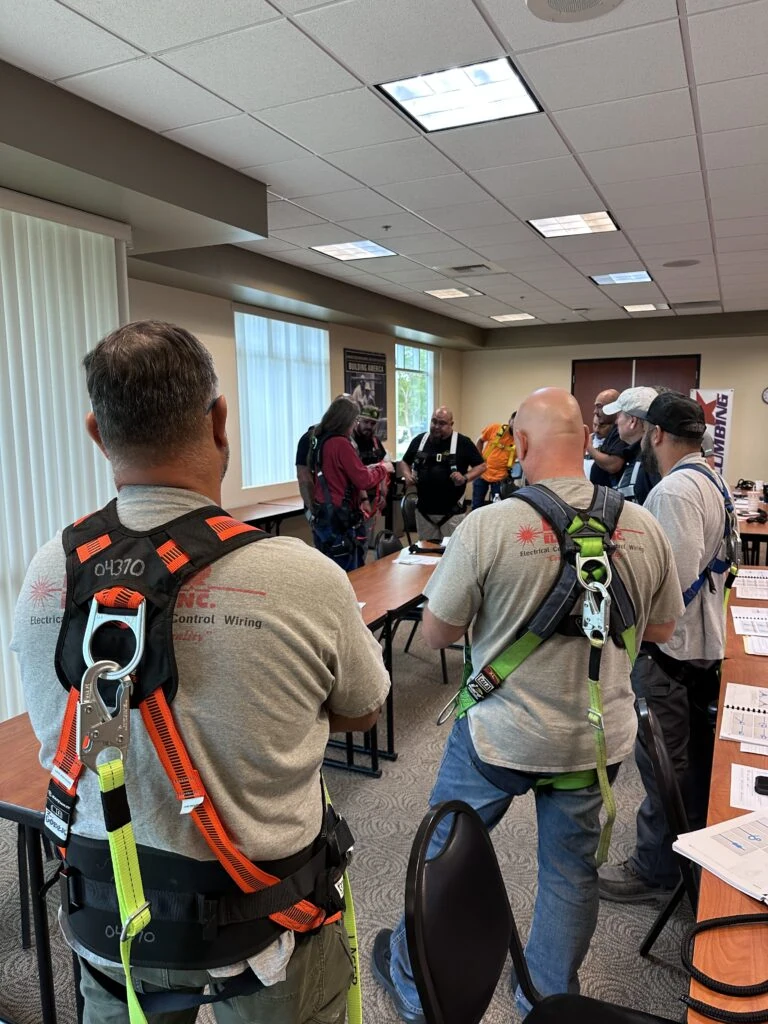
It's going to cost you about $45 a box, or you can get Narcan from one of those other locations or Naloxone. That's the same medication as Narcan. It's just a brand name for free. And again, it saves lives. Uh, and for anyone that's a construction industry leader that owns a company, uh, we can come out and we can train them your entire workforce before a job site on a job site before it starts 10 to 15 minutes, give us that time. We can train them. We can distribute Naloxone, uh, and they can have that resource for them.
And if I can say one more thing, uh, please, uh, if you have health insurance benefits that include mental health counseling, substance use treatment, please make a point to make sure that your workforce is aware of those resources there. And even going a step farther that if they're seeking treatment, please let them know that that's not hopefully going to be a barrier to future employment with them. Because unfortunately, sometimes people are worried about employment status and they may not seek that professional help there where we have good medicated assisted treatments now for opioid use disorder, uh, that can start when a person's ready today, or even when they're in the hospital recovering from a fentanyl poisoning.
Wow. Fantastic. Yes. I'm glad that you mentioned that about the mental health resources. You know, the resiliency in the construction industry is, is part of what we're known for, but it's that toughness that prevents us from asking for help. So construction leaders, uh, project managers, superintendents, workers, we're going to be educating everybody. Reach out, reach out to ABCC and Diego, reach out to Bill. We'll get you connected. There'll be resources available. So thank you so much for being with us today. That wraps our episode of coastlines to cranes, you know, for the construction industry, it's so important that we look out for each other.
That's what this is all about. Educating everybody that we're working with camaraderie on the job site, making sure we're watching out for everyone. So that's a wrap with coastlines to cranes. Thank you so much. And, you know, stay classy, San Diego.