Transcript
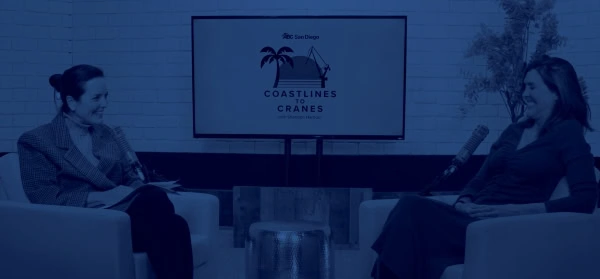
Good morning, San Diego. Welcome to Coastlines to Cranes. We are the podcast that tells the stories in the construction industry from the people and the culture from the coastlines and the towering cranes and everything in between. I'm your host, Shandon Harbour. Welcome back to another episode of Coastlines to Cranes. Today, we are talking about a very important topic. It's not flashy, but it's a very important one. And it's not necessarily showing up in your safety talks or in your safety reports, but it is showing up in the emergency rooms and it is showing up in families and it is showing up with heartbreak.
We're going to talk about fentanyl today. And today with us, we have a wonderful guest, Mr. Bill Perno. He is a retired deputy sheriff and he is now with Say San Diego and he's going to talk to us about fentanyl. Welcome, Bill. Thank you for your prior service. Thank you for being here today. Thank you for having me. Yes. And so, Bill, you know, fentanyl is this word that we hear quite a bit. Not very many people know exactly what it is. Share a little bit about what is fentanyl? How is it coming into the construction industry?
And yeah, tell us a little bit about it. It's not the drugs that we're used to. Sure. Fentanyl has been around since the 1960s in the pharmaceutical industry. So it is legitimately used in hospitals, pharmacies. Paramedics may have this to treat a person that's injured, say, at a job site or in a car accident or they break a bone, break in a lot of pain. So fentanyl is an opioid. Now that fentanyl is being manufactured by the pharmaceutical industry, it's going to be manufactured under laboratory conditions. They'll give you the right amount based on your size and weight.
And if something happens, they'll have naloxone or Narcan to reverse an opioid overdose. What has been happening in recent years for at least since 2013 is fentanyl in the street drugs. Now that fentanyl is not manufactured by the pharmaceutical industry. This is clandestine manufacturing of fentanyl, no quality control, and it's a very, very small amount of fentanyl that can cause a fatal overdose. So to understand fentanyl, we use morphine and heroin as equivalents. So fentanyl is 100 times stronger than morphine. And if you're wondering about morphine, think about the World War II movie, the wounded soldier on the battlefield.
The medic comes up to take away their pain, would stick them in the leg with that morphine syrette. And fentanyl, when compared to heroin, is 30 to 50 times stronger than heroin. And two milligrams of fentanyl, about 20 grains of salt in the palm of your hand is the amount of fentanyl that would kill an adult sized person with no tolerance to opioids. That's how powerful fentanyl is. So we have been seeing fentanyl added into all the street drugs, drugs coming off of social media, and people just don't realize it's there because you can't smell or taste fentanyl.
And we've had record numbers of deaths in San Diego County and across the country from fentanyl and other synthetic opioids. But fentanyl is clearly the bulk of the deaths. Wow. Wow. That's, I mean, mind-blowing when you're telling me about all this different, you know, statistics about where it actually came from and evolved and where it is now. Interesting thing, it's really hitting our construction industry. There's a crisis that's happening. Why do you think it's happening so much in the construction industry? And then, you know, you and I met not that long ago, and it was noted that construction is the number two industry where fentanyl is impacting the deaths.
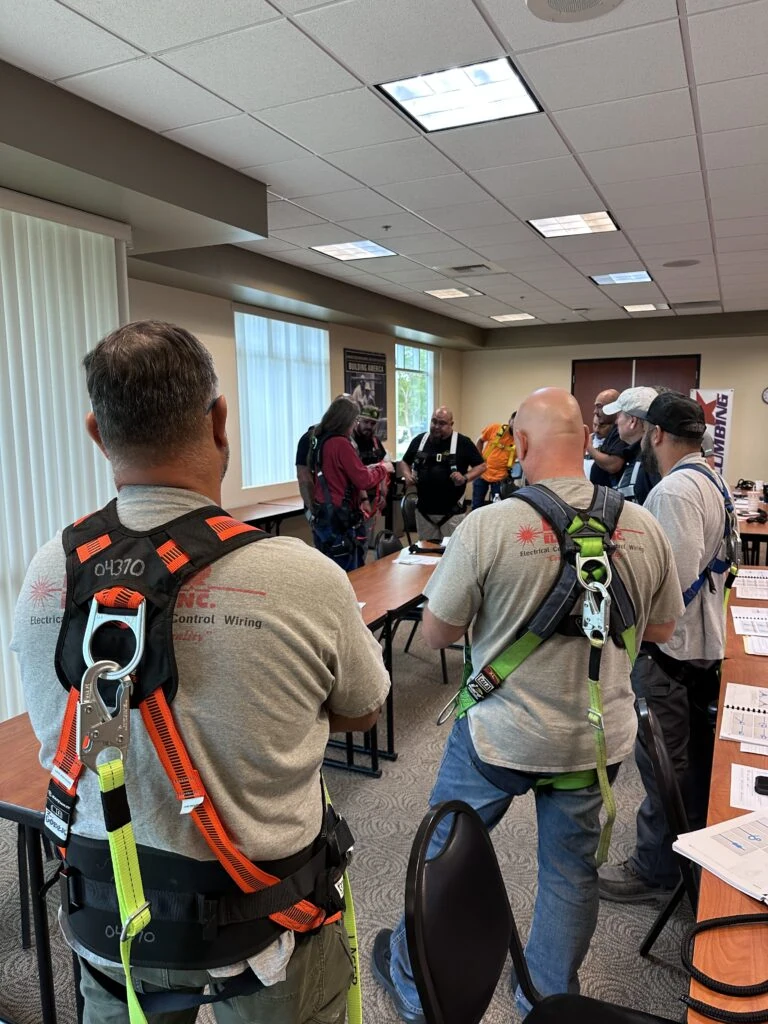
So why is that? Sure. Thank you. We've been collaborating and doing presentations or trainings in the construction industry for a few years now. I have civilian colleagues with the DEA that we co-present together. There are law enforcement personnel from Narcotics Task Force Team 10 or the DEA Overdose response team. We've been at construction sites, training construction workers right at the beginning of their shift. We'll take, you know, 15 or 20 minutes. We'll teach them how to recognize an opioid overdose, how to use naloxone, Narcan to try and reverse that and talk about the risks there.
But the construction industry is an industry where people are prone to injuries and they may have an injury where they're in a lot of pain where they need to be treated with opioids. So we look at the waves of the opioid epidemic. The first wave of the opioid epidemic started in the mid-1990s. Purdue Pharma came out with their drug Oxycontin and they used a flawed study then to say that their drug was not addictive when it was actually highly addictive. And in that first wave of the opioid epidemic were construction workers and 250,000 people in the United States died from real opioid pain medications that came from a pharmacy.
Millions more became addicted or overdosed on those drugs. Still to the point that today, four out of five or 80% of new people with heroin substance use disorders started with a prescription opioid pain medication. So while we talked about those prescription opioid pain medications, they're very effective at relieving pain, but it's also important to note that any opioid drug, whether it's coming from the legitimate pharmaceutical industry or the illicit clandestine side of things, they are all highly addictive drugs. They should be for short-term acute pain. But back in that first wave, the doctors were told to broaden who they prescribed opioid drugs to.
So we had a lot of people that got addicted to those drugs there and that included construction workers. And then the second wave of our opioid epidemic beginning in about 2010, when doctors now were realizing that people were getting addicted to these drugs, were cutting them off, weren't prescribing pills to them anymore. People turned to the streets looking for pills that were diverted, stolen, expired. And then people figured out that heroin, your brain cannot distinguish from prescription opioid pain medications or heroin. It sees them the same. So the second wave of the opioid epidemic was heroin in about 2010.
And then the third wave of the opioid epidemic, uh, was fentanyl where we have, um, Mexican transnational criminal organizations. A couple of them, uh, figured out that people in the United States were more hesitant to put a needle in their arm for injecting heroin, but no one seemed to have a problem taking pills. So they developed counterfeit pills that look exactly like they're coming from a pharmacy, except a hundred percent they're fake. There is no prescription medication in there. The drug that's inside of there is fentanyl. And we talk about that two milligrams, 20 grains of salt.
That's a very small amount. So, uh, when I did the training and I don't have it with me right now, but I used a little small sugar packet. This is a small sugar packet. You get when you buy a cup of coffee there to put into your coffee or tea, favorite beverage, that small sugar packet, it's sugar and it's only about half full. But if that was fentanyl and two milligrams, 20 grains of salt in the palm of your hand would be enough to kill an adult size person with no tolerance to opioids. In other words, they're not using them on a regular basis.
Uh, you recall me asking the group, how many people do you think a sugar packet worth of fentanyl could kill? And people will say five, 10, 20, maybe a hundred. In reality, that one sugar packet worth of fentanyl has 2.83 grams of sugar, 2,830 milligrams, just two milligrams enough to kill that adult size person with no tolerance. That's enough fentanyl to kill 1,415 adult size people. And then we talk about babies and toddlers, uh, that they're crawling around. They find things on the ground and every parent knows if they find something, where's it going to go right into their mouth.
So we talk about also, uh, don't ever think a person is too young to experience a fentanyl overdose or a poisoning death. And unfortunately, uh, every year we lose, um, people throughout the United States, very young people, one-year-olds, two-year-olds from fentanyl poisonings, from something they found, um, that they then ingested accidentally. Such a tragedy. I do exactly remember the sugar packet example. I was in the back of the room thinking, uh, maybe that's, you know, going to five, 10 people because it's such a small amount. And when you said a thousand, over a thousand people from that sugar packet, it was mind blowing to me.
So the illustration really resonated. So our listeners are construction owners, leaders, workers, and everybody in between. If I'm a construction leader, superintendent, project manager, safety manager, or company owner, how do I find you? Where do I start with educating my team about the, the perils of fentanyl and, or where do I find the, this Narcan that you're talking about? You know, guide me on how, where are the resources? Sure. Now, um, I work for a nonprofit, say San Diego, as a senior prevention specialist. We are funded by the County of San Diego to do alcohol and other drug prevention in the community.
We also have a separate contract with the County of San Diego that allows me to go anywhere within the County of San Diego and provide training to anyone regarding fentanyl and opioids, how to recognize an opioid overdose, how to use naloxone. Many of you may have heard of it by the brand name Narcan, but the medication inside there is naloxone, how to use naloxone to reverse an opioid overdose and distribute naloxone, uh, for free anywhere in the County of San Diego. We'll share resources on where you can get the naloxone. And again, we have partners that we'll partner with.
Um, we recently with the training for you, we partnered with the, uh, CDC foundation, the overdose response strategy, uh, team, and then the HIDA, the high intensity drug trafficking, um, agency here for, um, San Diego County and Imperial County. And we were able to provide that training at no cost and provide naloxone to everyone who attended that event. We can also train on how to use fentanyl test strips, uh, to test drugs for fentanyl. Uh, but these are all, um, things that are free of charge. And then naloxone comes from the County of San Diego and the state of California to the idea is that simply put naloxone Narcan saves lives.
And, uh, about two years ago, I was given a training and a person from the U S attorney's office was at that training. And he said something that resonated with me. He said, every home in San Diego County should have a box of naloxone in it. And I would say, yes, I agree a hundred thousand percent with that. I would say at least one box, if not two boxes, uh, in the home there. So what we want people to understand is how to recognize that opioid overdose and what to do when something happens. So would you like me to explain that?
Yes. All right. How, how would I, what my next question, actually you read my mind. Yeah. How would I know or what are the symptoms? What are the signs that I should be looking for if I'm out on a construction site or, you know, I see people in their car when they're pulling up to the construction site? Yeah. So on the construction sites, you know, usually when I'll give a presentation there, I'll talk about the porta potties, places where people can have privacy and I'll tell the workers, if you are missing someone on a job site and you can't find them and a porta potty door is locked and you're banging on the door and no one is answering up.
First of all, I tell them if you're in there, answer up. Yeah. But if you're not answering up and that door is locked, there's a good chance that that person you're missing is on the other side of that door, potentially overdosing and dying from an opioid overdose. So if they pull really hard on that door, they can actually break the plastic latch and get in there. And we know this because unfortunately, we've had deaths on construction sites in San Diego County in those porta potties, but any place where there's some privacy. Um, so how do we recognize an opioid overdose?
So the way opioids kill is they slow and stop our breathing. We all have opioid receptors in our brain, uh, opioid drugs attached to those receptors. They're very effective at relieving pain. We can also use them to induce anesthesia, make a person unconscious for surgery. They can also be put into an epidural for a woman, let's say in childbirth to relieve the pain during childbirth. Uh, and again, it's at two milligrams, 20 grains of salt in the palm of the hand. It's enough to cause that fatal overdose in the medical settings. They're using microgram doses of fentanyl, not milligram.
Right. And so the way we recognize an opioid overdose, um, the way they kill is the part of the brain that the opioid drugs are affecting is the part of the brain that sends a signal to our body to breathe. So we're breathing in, we're breathing out right now. We don't even have to think about that. That's happening automatically, but opioids depress that part of the brain to where the signal the brain is sending to the body, uh, becomes, um, either slow, not normal or completely stops. So we don't have a lot of time when there's an opioid overdose.
If a person stops breathing and CPR is an incredibly effective skill to keep a person alive until first responders get there. But if no one's doing CPR on that person and they stopped breathing in just four to six minutes, brain cells start dying by 10 minutes, a person can be dead. In the meantime, a tremendous amount of damage is happening to the brain and central nervous system to where even if that person survives, their quality of life may be forever changed. So opioid overdoses, we may see a few different things. We may see a person that's unresponsive.
They look like they're in a deep sleep. We can't wake them up. They may be awake, but unable to respond to us. They may be stumbling around in the beginning stages, uh, while they're still conscious, like they've had too much alcohol to drink before they go unconscious. Um, so again, that breathing is slow, not normal or completely stops for the person that's unresponsive. We can't wake them up as the brain is forgetting to send the body, uh, forgetting to send that signal to breathe. The body's fighting for life. So you may hear loud, rough snoring sounds, choking, gurgling, gasping sounds, foaming at the nose or mouth.
Uh, these are all indicators of lack of oxygen in the body. The pupils, the dark part of the eye will be tiny. Opioid drugs will constrict them. Uh, lips and fingertips. If the person is light skinned, you may see a blue color to their lips or fingertips. That's a lack of oxygen in the body. If they're dark skin, you may see a gray color or an ash colored. Uh, you may see someone with pale skin, purple skin, uh, cold and clammy skin. These are all indicators of lack of oxygen in the body.