Transcript
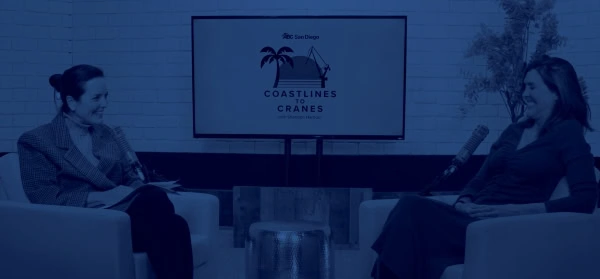
Good morning, San Diego. Welcome to another episode of Coastlines to Cranes. It is ABC's construction podcast. We are the original construction podcast where we talk about the people, the culture, and everything related to construction from the coastlines to the cranes and everything in between. And today we have as our guest, my dear friend, Kevin Hartnet, who has been a longtime volunteer with ABC, Laser Electric, having been joined as a member over 36 years ago. We welcome today, Kevin. Great to see you, Kevin. How are you? Thanks, Shandon. Good. We're going to hear all about your story today.
And I'm super excited because I know you have a really fascinating background and you have the journey of actually being in the trades and then starting your own business and then getting that up to a very successful level and then handing it off to the next generation, which not many business owners are able to say that they have done. I've got this great retirement tan going on, looking very relaxed since the last time I saw you. So yeah, I just like to tell our listeners this story and how did you get started in the trades?
You know, it's interesting that I'm an electrician by trade and it's kind of the blood in our family. And my grandfather's an electrician, my dad was an electrician, my brother's an electrician. But I never really wanted to be an electrician. I wanted to be an architect. And I, my family just didn't really have the money to send me to school and be able to do that. So I decided to do something different. And I got a job at National Steel and Shipbuilding in the early 1970s as a trainee, electrical trainee. And was that in San Diego?
San Diego. Oh, wow. At NASCO, yeah. Yeah. And I loved it. We wired oil tankers and did service work on naval ships at 32nd Street. And it was really fascinating. And I loved it. And I kept learning and learning and learning all kinds of new stuff. And I'm, I'm really good at math and science. And so the training school that was at NASCO at that time was really good. And I learned a lot. And then I had an opportunity to get into the construction apprenticeship, which I jumped on and got on right away as an apprentice.
I did housing, apartments, some hotels. I worked at San Onofre at the power plant for a year. I worked on a bunch of commercial buildings, just all over the place in San Diego County. And I just loved it. I love the fact I got to move around quite a bit to different job sites and learned just a ton of things about different kinds, different facets of the trade. I also did a lot of low voltage work toward the end of my apprenticeship. So when I finished my apprenticeship, I became a foreman. And I started immediately, almost the contractors trusted me and put me in as a foreman.
And I started running some fairly large projects. And just really continued to grow and learn. And it was great. I got a lot out of it and loved the trade, loved working on construction with the other trades. And it was really fascinating for me. Wow, that is such a great story. I had no idea that you started a shipbuilding company here in San Diego. So how did you make the leap from being a foreman, you know, and accelerating in the role as electrician to then starting a business or, you know, going into business for yourself or getting a partner or, you know, the laser electric story?
Because that takes a lot of risk out there. It does. It takes a lot of risk. And, you know, it's probably at least as risky today as it was then. But it's scary for any business owner to start a business from scratch and jump in with a little bit of money and a lot of vision, but not enough money to put all that vision in place. It's a time thing. But at the time I was in the union still, local electrical workers union, and things were falling apart. There was a lot of political adversity going on inside the union.
And then we were starting to see a lot of missed work because of all the upward wage pressure that San Onofre had put on the local community. And so the contractors here in town were feeling that wage pressure. And it was just constant for years because the San Onofre lasted for probably 10 years or so. And there were a thousand electricians up there. But the local contractors in town were getting very frustrated with the fact that wages kept rising and rising. And there started to be a non-union merit shop element here in town. And they were having to fight against that and try and stay in business.
It was tough. So a lot of them got together and decided they were going to leave the union as signatory contractors and join the newly formed chapter of ABC. ABC. I don't think it had been in existence for more than just a few years. And so there was a fairly large group of significant size contractors like Berg Electric and Helix and so on that got together and left. And I never knew this story. This is amazing. This is so great. It was a really weird time because I'd always grown up in the town was basically known as a union town.
Yes. And it was changing. The economics were making it change. So anyway, during that same time, I started thinking, well, why do I want to stay in this union side of this? I don't really believe in what they're trying to do. I don't think that unions are really the be all that they want to be for everybody. For me, I just saw a lot of things that I didn't like about the union and the administration of the union and so on. So I told my wife, if we get the opportunity, I'm going to go in business.
And so we toughed it out and we got a little bit of money put together and our in-laws helped us. And we formed a business and it was just me. And we got going. Wow. And how long ago was that? That was 1987. Oh, my goodness. Yeah. And so within about five, six years, I guess, we joined ABC San Diego. And fairly soon after that, I got involved in the Electrical Apprenticeship Committee that formed because we had gotten a charter from the state and the federal government to have an apprenticeship program. And so I got on the committee to help guide it and keep the education level high and make sure we had the right teachers.
And it was a great group of guys. There was five or six of us on the committee and we were really dedicated. And that was kind of the really tough, hard fought beginning of our apprenticeship program that really got formulated. Well, we put a nice framework together and it's come a long way since then. Oh, my goodness. Has it ever? I mean, we were just talking off camera about the hundreds of graduates that we have in especially the electrical program at graduation. When we call up the electricians, you know, the whole several rows, hundreds of graduates stand up.
I mean, so this whole time you're you're helping ABC get the apprenticeship program off the ground and you're starting your own business. How did you manage all of that? And, you know, then did you start seeing fruits of your labor with the growth of more employees? And I mean, over time, or was it struggle paycheck to paycheck? The first I would say two to three years was really a struggle. I had a partner when we first started. He got cold feet and left. And then it really got scary because now I was on my own.
And my wife was a nurse at the time and she was working as a nurse. That was our income. And so I would go out every day and I'd put my sales hat on and I do my estimating hat or I do my work tool portion and I do the jobs. I was all by myself. And I did that for several years. And then we got a big break. And I think every business needs a break to get you going. And I got a big break with a customer that really wanted us to do a remodel pretty much a whole building.
It was a three-story building. And I hired my first guys and started putting on more sales hat and estimating hat than work hat. And it really worked out well. I hired some really good guys and they really helped me a lot. And we got going. And so from there we just started to grow a little tiny bit at a time. I really wanted to slowly grow, do things right. We always really emphasize safety and I'm really proud of the safety record we've had since we started the business in '87. We've never, ever had an electrical accident or an electrical injury or any kind of major injury.
I mean, safety has always just been really huge to me. And I learned that from the union. I'll say that because the union is very big about safety as well. But I took that to heart and we have a great safety record. But anyway, we just grew the business on a slow, steady curve and weathered all the recessions and changes in the economy by diversifying as much as we could. And it worked out well. And so I'm just feeling a little bit emotional about it because I know that my dad, too, in our family business, we ended up selling.
So we weren't not successful in passing it down and in the form, you know, of a contracting business. But he was always a big proponent about slow, methodical growth, you know, slow and steady instead of over leveraging. And he was always counseling me when I worked for him, you know, just don't over leverage yourself. Keep yourself, you know, really nice, slow paced growth. I mean, this is really interesting to me. I did not know your full story about how laser electric got going, but I have seen you really grow since I've known you in the last 10 years or so from your office there on Miramar to, you know, actually taking over the former Berg location, you know, or you were over there in Escondido and then across the street.
So significant growth, you know, in the last last few years. And then so how did you navigate? This part is also fascinating to me because, you know, of my family story. But how did you get it from your generation to your children when you I know you have multiple children? You know, it's not just one. You know, there is one that's taken a significant role in the business. But how did you navigate that that process? I mean, is there any advice for other contractors that are in that journey? You know, I think there's several things that are really important that we learned, and mostly through the seat of our pants, because that's probably the best way that most people learn anyway.
That's how it happens. But I really felt that we needed to be– we needed to find really great advisors, a banker, insurance, bonding, and so on, accountant, and find the ones that really fit our business and fit what we were trying to do and stay with them. And we were very loyal to this group of advisors that we had. And we would meet with them regularly. And as time went on, we started talking to them more and more about succession planning. And they were really good to us with offering us a lot of great advice and also bringing in some other advisors that were helping us to form a plan.
And I can't emphasize enough that as number one, getting a great group of advisors that you're loyal to and they're loyal to you. And then formulating a plan, because if a business owner waits too long– one of the advisors told me years before we started, it's easy to get into business compared to getting out. Really? Exiting out is very, very difficult, and it really is. It's hard to get out because you've got so many things going on, including running your business. Right. We're trying to figure out how am I going to get out of this.
Am I going to sell it? Am I going to do an ESOP? Am I going to do something different with it? But it all comes down to planning and figuring out a plan that's going to work for you and your family and your business. And it just so happened that my son had come up through the business. He was an apprentice, a foreman, an estimator, a project manager, all those things. He excelled at everything he did. So we made him a general manager even before we'd put the plan in place. And then we finally put a framework of a plan together, came to him and said, this is what we want to do.
How interested are you in this? And he said, I'm really interested. And this was about five years before we finalized it and sold the business to him. But it really worked well. Again, our advisors were key in this whole thing. Coming to an agreement and a plan, three to five years, it was completely formalized before we put it into place and came to fruition. It was all really good. Excellent. And all the siblings are fine and everyone's happy. Yeah. You're like, oh, no, I don't want to say. You know, I think one of the things that worked out really well for us was I told Justin, my son, that your role in this is to grow the business.
And we'll get bought out by the business rather than you having to come up with the money, but you're going to have to grow it. And when we started the plan, we were doing about $20 million a year. And I have to say that he did a great job doubling that and growing us to $40 million a year. We were running about 75 employees pretty steadily at $20 million, and he grew it to 175 employees. Wow. And we were steady at that for a long time until this latest economic downturn happened. We were real steady and had to have a great group of customers and contractors we work with, which is still there, but it's just that the economy has slowed down.
Right, right. Well, that's super exciting. And I mean, just congratulations on that whole succession plan and story. And we love Justin and Emily and the team. And it's great to see them continue with ABC and have the same core values and beliefs and everything and laser being a key part of all of that. You know, switching over to your role with the apprenticeship program and how you grew that apprenticeship program. So you started at the same time you're growing your business. You're doing all that. You got family. All the things are happening. Right. You still had time for ABC to come to faithfully to all of our electrical committees and our, you know, political advice action committees and, you know, getting involved and running our trust and making sure that the fiduciary responsibility was all, you know, in lockstep.
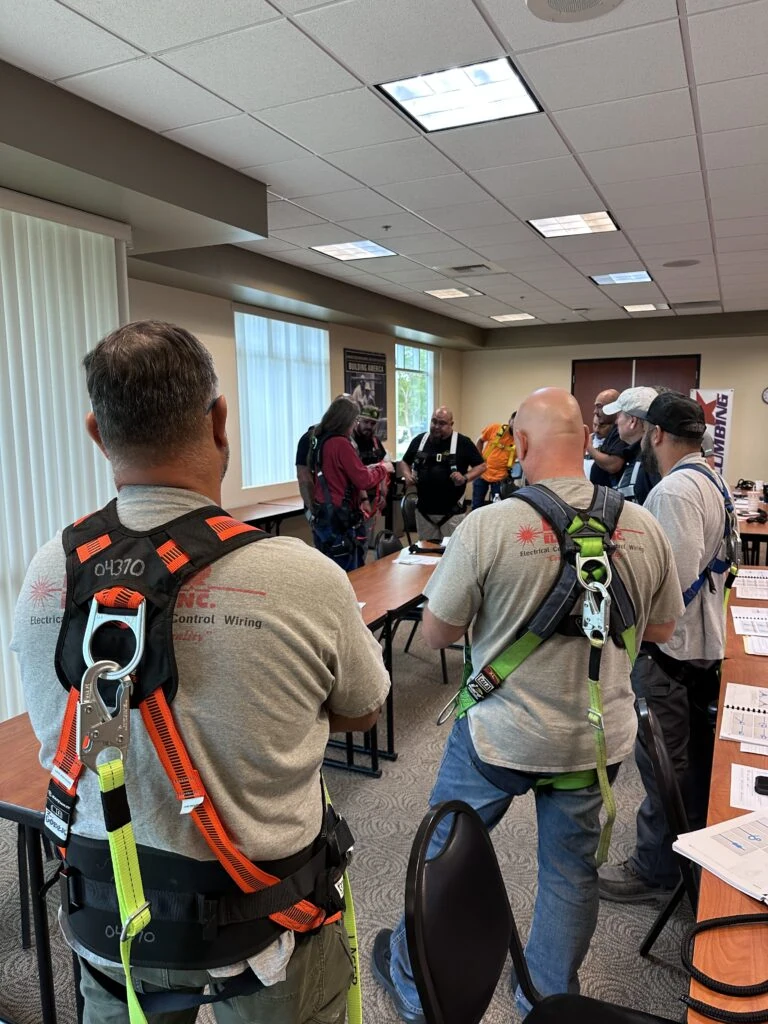
Which, you know, at the point where you were stepping off, it was handed off beautifully. Everything's in order. It's, it's a well running machine and lots to say. How did you, you know, what inspired you on all of that? And how did you make time for it? And for anybody else that's interested in getting involved in ABC, what's your, what's your advice for them? You know, I always had it in my heart that I love the training that I got from other people. And I really felt that it was important. If I believed in safety like I do and I believe in training and I believe in people having great careers that I need to put that into practice by getting involved in an apprenticeship program that I really believed in.
And being a part of the kind of the core beginning of the ABC San Diego electrical apprenticeship program. I kind of felt an obligation along with all the joy that I got from seeing people get into the career that I had gotten into and love so much and giving them great careers. I saw the fruit of that with, you know, these apprentices, all of a sudden they're getting married, buying vehicles or buying houses and it was awesome. And I loved it. And so from that, it's just been a passion of my life. In fact, I have to say that as much as I loved our business and doing the things in our business, my greatest joy has always been to promote our apprenticeship program, bring new apprentices in.
I've tried in the last probably five to ten years to really focus more on bringing women in because they deserve the same chance as the men do to become apprentices. But it's just such a great career to grow with and to learn from. You learn every day. You can learn something new. And I just really love to see our program flourish, which it has, and do well. And all the apprentices in it have an opportunity to make great careers for themselves. Absolutely. And, you know, forever grateful for all your volunteer work to make that happen because, as I shared with you off camera before we started, my nephew's in the program.
So it's always nice to see that. Look at the pay it forward. You know, a couple memories that are core memories for me, Kevin, are the time that you were our graduation speaker and you got up and talked about the force multiplier effect and, you know, that role of the apprenticeship and paying it forward and all the things. And I stood there just aghast like this is a phenomenal speech. I mean, I asked you for the remarks in writing afterwards and just an indelible mark on that audience there and myself and then always, you know, being very supportive of the program.
And I had sat in a couple of the apprenticeship electrical committee meetings. And I remember you distinctly saying, son, you know, an apprentice had come into committee. We know that getting called to committee is not always the best good thing that's going on. They might need that that structure and guidance that we provide. And so you're like, son, do you know why you're here? And I think it was maybe OJT hours or something. Right. And I remember looking at you going, they need they need you so much at that moment. They need that structure and guidance.
And and just the general care and feeding that you provided for apprentices down to the individual one really is such a remarkable legacy that you will leave with ABC. And then my last one is that we have our craft championship. Right. And we're doing a bunch of stuff for the craft championship. And and it's a big deal. And one of the attendees, he wasn't in the competition, but he was a he was an apprentice and he was there attending just and he was getting shuttled back. I happen to be the driver because, you know, we do everything in this business.
And I was driving him back and I said, where do you work? And he said, oh, I work for Laser Electric. And I said, you work for one of the best families I know. And he said, I know. And I'm like, don't screw it up. So he just had so many great things to say about, you know, you and the family and the business. And that culture just really resonates through the people that you employ and through your apprentices. And and so a lot of core memories. I could sit here and talk to you all day.
Is there anything that you want to share before we wrap up our conversation? I think a couple of things that I've learned over my time in business and being part of ABC is something that a real dear friend of mine who just recently passed away taught me. And we talked about a lot is servant leadership. I think it's so important for leaders to understand that by not promoting themselves and being humble and trying to give others a chance to be in the light and to shine and to come up with bright ideas and so on.
And incorporate as much as you can the people working with you as a team to be the important person in the room instead of yourself. I call that servant leadership. And I think that is such an important concept that really helps an organization be stronger, be better, to bring in new blood and new people and new ideas. Because they realize that just because this person is called the owner or the leader of the company needs to mean more than just somebody that is in charge. It needs to be understood that that person is trying to help you become better at what you do and someone that is listened to and can be a great part of any organization, whether it's a business or something else.
Servant leadership is an important concept. And I've tried to incorporate it in my life as a business owner and a lot of the other things I've done. Wow, such a great thing to wrap up on. And I was thinking, I have to have you come back again, because I haven't even asked you questions about your retirement, you know, where you're traveling, all the great things that we want to hear about, like the next chapter of your life. So you'll have to come back at another one. I'd love to. But we'll wrap this one up. There you have it.
That's Kevin Hartnett, one of the greats in San Diego, the greats of ABC, as we are celebrating our 50 years in business. Kevin and Laser Electric and the Hartnett family, Denise Hartnett. Hi. Wonderful to have you part of our legacy and everything that we are at ABC. Thanks to Kevin for being here. If you enjoyed our episode, please give us a like or hit subscribe, leave comments for us. We'd love to hear from you. And you know how we always wrap it up. Stay classy, San Diego.