Transcript
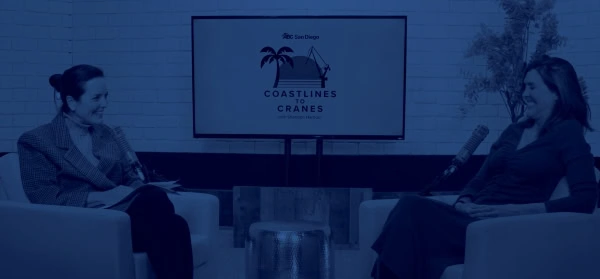
Good morning, San Diego. Welcome to Coastlines to Cranes. I'm your host, Shandon Harbour. Today, we are talking about something just as important as hard hats and steel-toed shoes. We are talking about mental health in construction, where mental safety is just as important as physical safety. So, let's get right into it. Construction has one of the highest industry rates of suicide. And a lot of us are wondering, why would the construction industry have such a high rate of suicide and mental health issues? And the reason for that, there are many, we're going to talk about them, is that it is a high-risk, high-fear-factor, type-A personality construction field that attracts those that are in the industry.
And because of that, there is a high rate of folks that, if they're in a bad place, they will actually die by suicide. And so, let's break down the statistics a little bit. In mental health, on suicide, the number one industry is actually mining, which I believe is very similar to construction. Number two is construction. Right around there is military. And you look at the type of people that go into construction and military, and you're talking about men, mostly men, 18 to 45. And they are A players, and they are A players. They have a propensity to be leaders and to be hard workers and to be driven.
And so, that's the type of person that comes into the construction industry. And they might have had prior military service. We do see quite a bit of military that transition to construction. And so, because of that, there are different factors that come into play with these individuals. First of all, there's a lot of pressure. You're going to work early mornings. You're waking up sometimes 3 in the morning to get to your job sites. And then working hard all day, coming home to a family where the significant other, your wife, has had the kids all day.
You get home. The kids are kind of cranky. People are ready for dinner or whatnot. The wife says, okay, you're up. You need to take responsibility to transition the kid situation. And all you really want to do is sit on the couch and have a beer and relax and kind of decompress until the alarm goes off again the next morning at 3 a.m. So, you get home. You've got the family pressures. And you've got the kids. And depending on what age they are, they are wanting to either play with you or they need help with the homework or whatever it is.
And so, here you are. You're tired. You just want to relax. You do know that they've got the obligation of family responsibilities. I don't know where the financial situation is with everyone, but there's varying ranges. And there's a responsibility to continue to provide for families. And you get up and start all over again. And you do it at 3 in the morning. If you're in the apprenticeship program, you're going to class at night as well. So, you might be going to class and then getting home where there's a lot of pressure from the home life.
Now, all of those things come together. Let's talk about what the culture is on the job site. Construction is not known to be the industry of warm and fuzzies. You know, your project manager comes up to you. They usually don't have a conversation that it looks like, hey, next time you want to do that, you might not want to make that mistake. You might want to do this or that. It doesn't tend to be a culture of coaching. It tends to look more like, hey, did you just up everything? And it's usually yelling or some sort of very direct direction.
And if there was an error made, if it was a costly error, depending on how costly it was, those of us who are wired to be leaders or A performers really take that internally and internalize it. And if you've got these type of pressures on the job site combined with pressures from home, financial pressures, it starts to create a mental spiral that we don't talk about. Because if you're from that A player, typically male persona, then you bottle it and you put it inside and it becomes a pressure cooker. And so another reason why construction tends to have a high rate of suicide is because you have access to ways to take your life.
Let's face it, construction job sites are not your day-to-day workplace scenario. You're not walking into an office. You're typically walking out to places with high-powered equipment, very open buildings, lots of opportunities to utilize something on the job site. And you're also potentially open to things that you might have at home. You know, maybe you have guns or prescription medication. Because your personality is one that you're strong, you're a fighter, you don't like to fail. These are all the reasons why they're attributing the statistics to having suicide be a high rate in construction. So those are all the factors.
What can we do about it? Let's talk about that. This is the great thing. ABC and ABC San Diego is part of a greater network of a program called Vital Cog. And Vital Cog is a program specifically designed for you in the construction industry. For those of you listening to this podcast and you think, wow, this resonates with me. We have resources to help. The main thing is, for those of you that have ever participated in a CPR class, you know that you do not have to be a medical doctor to perform CPR. Just like with Vital Cog and mental health, you do not have to be a PhD or psychologist to help the person that's working right next to you.
The idea is we give you symptoms or we give you telltale signs to look for when you can see your comrade is not feeling right or not right. And we also help explain that it's okay to speak up. And part of that is psych safety, which we'll talk about in another episode, Culture in the Workplace. Not having fear of reprisal or fear of embarrassment to speak up to somebody that you know about, hey, something's not right with me. And so through Vital Cog, we're educating the construction industry just like a CPR class to teach everybody, hey, I can be that person.
I can be that confidant that somebody might reach out to me and say, I need some help. Or if you're the one that's identifying some of the symptoms or some of the factors, you can look at your comrade and say, hey, how are you doing today? And that's sometimes all it takes. I can give you a great story. There's a story that was told to me by a project manager and it really resonated. And he said he was on a job site, he's an electrician, and he was going by and saw this cement worker, concrete worker.
And he would say, good morning, how are you today? And the concrete worker never answered, just kept doing his thing. And initially, the manager thought, well, that's kind of rude. But he kept on about his day. And so the next day he came back, he saw the same gentleman, he said, good morning, how are you? And there was no response. And he thought, that's interesting. So he kept going on. He continued to do that every day for what he said was a couple weeks. Every day he would say, good morning. And this gentleman never answered, almost just ignored him.
And I should point out that the foreman manager, project manager, was a younger gentleman. And the concrete worker was an older gentleman. And what he went on to explain to me was, he went by one day and he said, good morning. And the gentleman stopped him. And he said, hi, how are you? I want to tell you something. And of course, this manager was completely taken aback because he had been saying good morning for a couple weeks and with no response. And now this gentleman stood up and spoke up and said, I want to tell you something.
He said, oh my gosh, what's going on here? And he went on to say that every day I looked forward to you saying good morning to me. And even though I didn't respond because I couldn't, I was in a really bad place, I would get up hoping that you would say good morning to me. It was what kept me going. And the concrete worker went on to explain to this gentleman that he was in a really bad place in a lot of different ways with his family, with his work, with his life. And the simplest thing with him coming in and saying good morning every day on the job site was what kept him going.
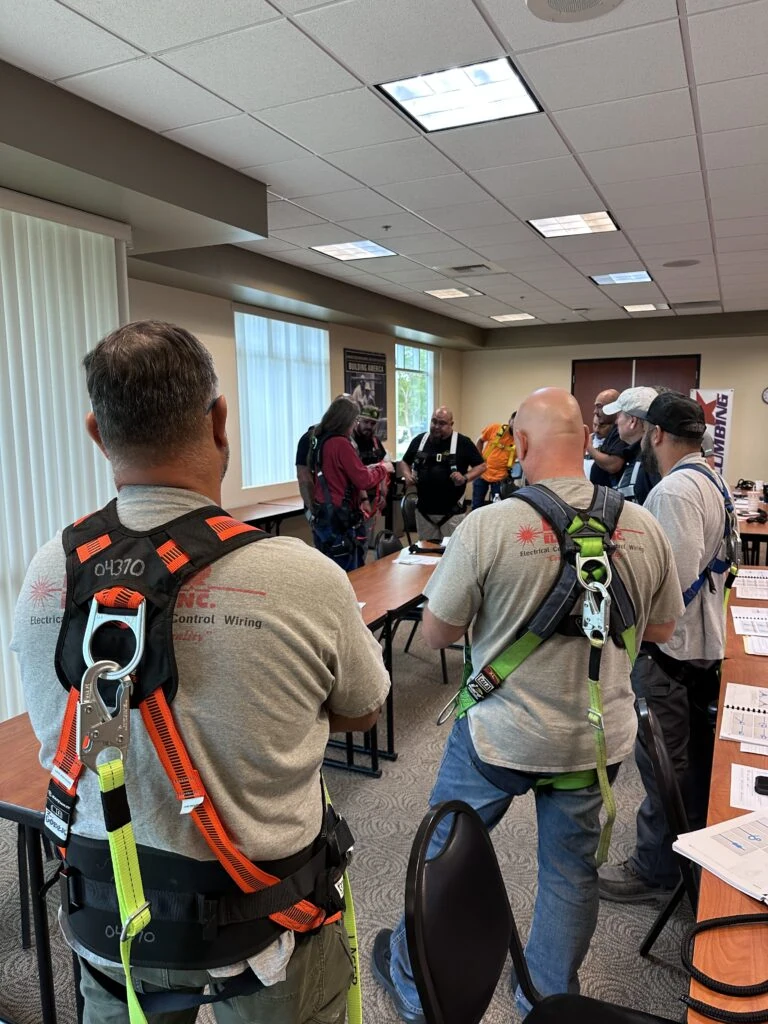
So you never know how your actions are impacting others. And it's as simple as sometimes a good morning or a hello, how are you today, that can make the difference in somebody's life. And I share that with you because that's the tools that we provide at ABC San Diego with through the Vital Cog training. And we can come out to your company and provide those at absolutely no cost. It's completely free. We provide all of the materials and the training. It's very much like a CPR training. It takes about an hour of your time. And we can give you the tips and tricks of what to look for on specific things with mental health in the construction industry.
The last thing I will share with you is that I did have an apprentice because we do these trainings with all of our apprentices coming through our program. And I had an apprentice approach me at the end of one of our classes and he said, I was homeless. I was living in a bush. I have done all the drugs you can possibly imagine possible. I have been convicted of robbery, theft. I have tried to take my own life. And by looking at this apprentice, you would never, ever guess it in a million years. He's a buff, strapping young man.
And I was really taken aback by the story I was sharing. And he said, if it weren't for ABC and your program and apprenticeship, I don't know where I would be in that through the dignity of work and through apprenticeship, he was able to find a path for himself. And I share that with you because our program does offer a path forward. And we have lots of different folks from lots of different places coming into our program. And so it's so important in construction to make sure that we're just reaching out and making sure we're all looking out for man to man.
As the Marines say, you know, no man left behind. You look to your left, you look to your right, and you do it for your fellow Marine. Well, in construction, you look to your left and you look to your right and you do it for your fellow construction comrade. And no man or woman, for that matter, should be left behind. So if you're listening today, take one step. Let's check in with a co-worker. Talk to a friend. Reach out to ABC San Diego and talk to us about the Vital Cog program and realize that one simple conversation can save a life.
This has been Coastlines to Cranes. I'm Shandon Harbour. Remember, strong minds build strong communities. And if you loved it, subscribe, read the show notes. There's more information. Give us a shout out. Give us a comment. Let us know what you want to hear on the next episode. Until then, stay classy, San Diego.